




تكتسب الألياف البازلتية اهتمامًا عالميًا باعتبارها مواد قوية ومتينة وصديقة للبيئة. وهي مصنوعة مباشرةً من الصخور البركانية الطبيعية، وتجمع بين الأداء الميكانيكي الممتاز والاستدامة. اليوم, الألياف البازلتية على نطاق واسع في البناء والنقل والطاقة والتصنيع الصناعي.
سنشرح في هذا الدليل ما هي الألياف البازلتية، وكيفية صنعها، وخصائصها الرئيسية، ولماذا أصبحت مادة مهمة في تطبيقات البناء والتطبيقات الصناعية الحديثة.
ما هي ألياف البازلت؟
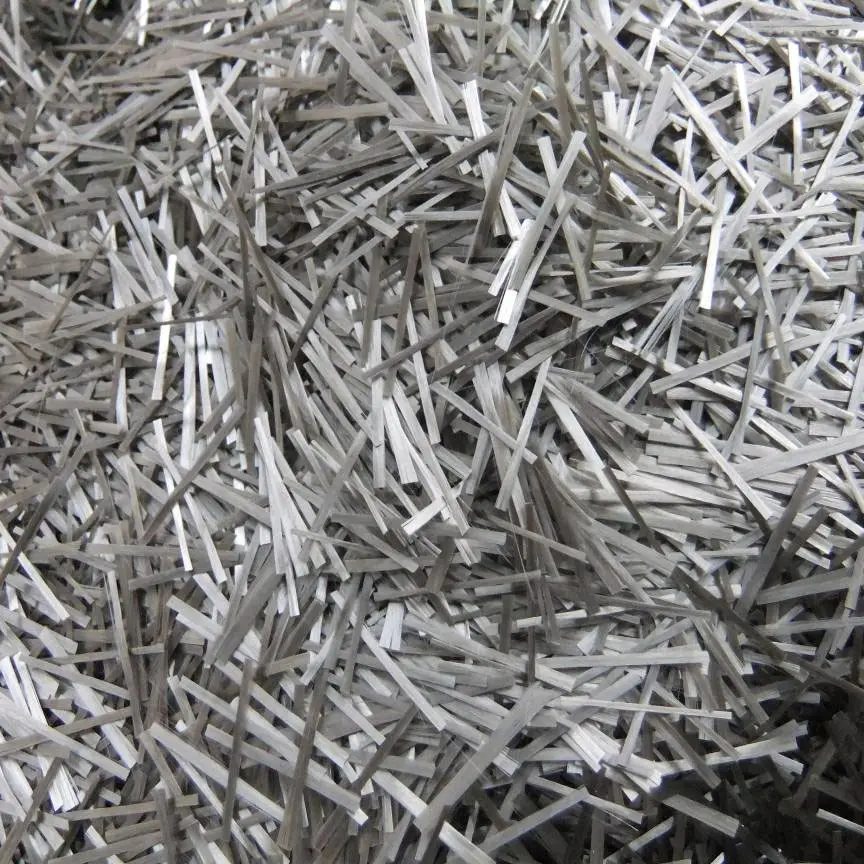
الألياف البازلتية هي ألياف غير عضوية عالية الأداء أُنتجت من صخور البازلت الطبيعيةهو حجر بركاني رمادي غامق أو أسود كثيف يتكون من تدفقات الحمم البركانية. ويُعد البازلت أحد أكثر الصخور وفرة على الأرض وهو غني بالمعادن المستقرة مثل السيليكون والألومنيوم والحديد والكالسيوم والمغنيسيوم.
لإنتاج الألياف البازلتية، تُصهر الصخور في درجة حرارة عالية ثم تُسحب إلى خيوط متصلة رفيعة مثل شعر الإنسان. ويمكن تحويل هذه الألياف إلى ألياف متجولة أو خيوط أو خيوط أو أقمشة أو شبكات أو ألياف مقطعة لاستخدامات مختلفة.
ما يجعل الألياف البازلتية فريدة من نوعها هو
- يستخدم 100% مادة خام طبيعية
- لا يتطلب إضافات كيميائية معقدة
- يوفر توازنًا بين القوة والمتانة والملاءمة البيئية
لأن الألياف البازلتية مصنوعة من دون إضافة مكونات كيميائية أخرى، فمن المعروف على نطاق واسع أنه مواد خضراء وصديقة للبيئة ومستدامةخاصة عند مقارنتها بالألياف التقليدية مثل الألياف الفولاذية أو ألياف الكربون.
أهمية ألياف البازلت في البناء
في مشاريع الإنشاءات في العالم الحقيقي، تتعرض المواد للإجهاد والتغيرات في درجات الحرارة والرطوبة والهجوم الكيميائي. ومع مرور الوقت، يمكن أن تؤدي هذه العوامل إلى التشقق والتآكل والتلف الهيكلي.
تساعد الألياف البازلتية في حل هذه المشاكل من خلال تحسين:
- مقاومة التشققات في الخرسانة
- القوة الهيكلية
- المتانة في البيئات القاسية
من خلال خبرتنا في العمل مع المقاولين ومهندسي المواد، فإن إضافة النوع المناسب من الألياف يمكن أن يطيل عمر خدمة الهياكل الخرسانية بشكل كبير مع تقليل تكاليف الصيانة.
الخصائص الرئيسية لألياف البازلت
تجمع ألياف البازلت بين العديد من مزايا الأداء المتعددة، مما يجعلها مناسبة للتطبيقات الصعبة.
1. قوة وصلابة عالية
تحتوي الألياف البازلتية على قوة شد عالية ومقاومة جيدة للإجهاد الميكانيكي. وتضاهي قوتها الألياف الزجاجية التقليدية، وأحيانًا أعلى منها. وهذا يجعلها مادة تقوية ممتازة للمواد المركبة والخرسانة.
كما أنها تتمتع بصلابة جيدة، مما يعني أنها لا تنكسر بسهولة تحت الحمل أو الاهتزاز.
2. مقاومة ممتازة لدرجات الحرارة
تتمثل إحدى الميزات البارزة للألياف البازلتية في قدرتها على الأداء في درجات الحرارة القصوى.
- تعمل في بيئات منخفضة مثل 260°C
- يمكن أن تتحمل درجات حرارة تصل إلى 700°C لفترات طويلة
- من الممكن التعرض لدرجات حرارة أعلى على المدى القصير
على عكس العديد من الألياف الاصطناعية، فإن الألياف البازلتية لا تذوب أو تتقطر أو تطلق أبخرة سامة تحت حرارة عالية، مما يجعلها مثالية لـ التطبيقات المقاومة للحريق والاستخدامات ذات درجات الحرارة العالية.
3. مقاومة قوية للتآكل والمواد الكيميائية
تعمل الألياف البازلتية بشكل جيد للغاية في البيئات العدوانية كيميائياً.
يقاوم الأحماض والقلويات والأملاح. وهذا يجعلها مناسبة بشكل خاص لما يلي البيئات البحرية، والمصانع الكيميائية، والمنشآت تحت الأرض، والبنية التحتية الساحليةحيث يمثل التآكل مصدر قلق كبير.
على عكس حديد التسليح الصلب، الألياف البازلتية لا تصدأ، مما يحسن بشكل كبير من المتانة على المدى الطويل.
4. عزل كهربائي جيد
الألياف البازلتية غير موصلةيوفر عزلًا كهربائيًا موثوقًا. يعمل بشكل جيد في الظروف الجافة والرطبة على حد سواء، مما يجعله آمناً للاستخدام في:
- المكونات الكهربائية
- مرافق الطاقة
- أنظمة العزل الصناعي
5. صديقة للبيئة وآمنة
أصبحت الاستدامة عاملاً رئيسياً في اختيار مواد البناء.
تبرز الألياف البازلتية للأسباب التالية:
- إنه مصنوع من الصخور البركانية الطبيعية
- لا حاجة إلى إضافات ضارة
- الإنتاج له تأثير بيئي منخفض نسبيًا
- غير سام وآمن للاستخدام الآدمي
بالنسبة للشركات التي تهدف إلى تلبية المعايير البيئية، فإن الألياف البازلتية مرشحة بقوة.
كيف تُصنع ألياف البازلت؟
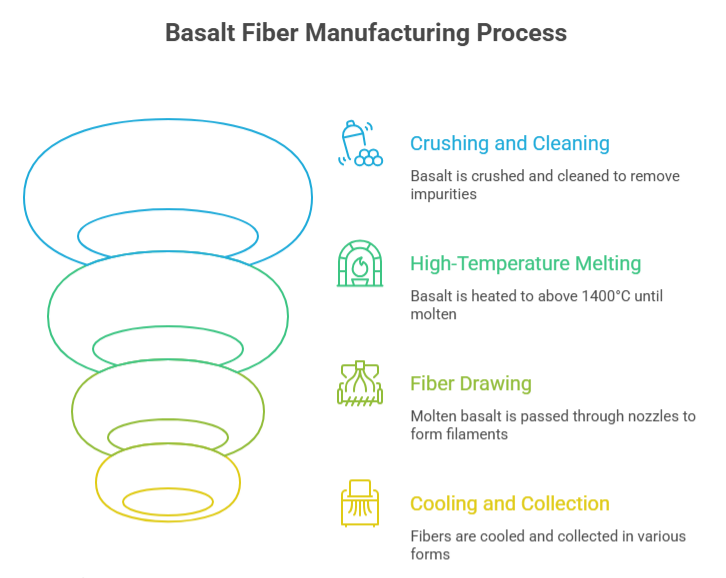
تعتبر عملية تصنيع الألياف البازلتية بسيطة نسبيًا مقارنةً بالعديد من الألياف الاصطناعية.
الخطوة 1: اختيار المواد الخام
يتم اختيار صخور البازلت الطبيعية عالية الجودة وسحقها وتنظيفها لإزالة الشوائب.
الخطوة 2: الصهر في درجات الحرارة العالية
يتم تسخين البازلت في فرن عند درجات حرارة أعلى من 1400°C حتى يصبح منصهرًا.
الخطوة 3: رسم الألياف
يتم تمرير المادة المنصهرة من خلال فوهات صغيرة، مما يشكل خيوطًا متصلة. هذه الخيوط دقيقة للغاية، تشبه الشعر.
الخطوة 4: التبريد والتجميع
يتم تبريد الألياف وتجميعها. ويمكن بعد ذلك معالجتها في أشكال مختلفة مثل:
- خيوط متصلة
- ألياف مقطعة
- خيوط الغزل
- الأقمشة
الميزة الرئيسية لهذه العملية هي لا حاجة لمكونات كيميائية إضافيةمما يجعلها فعالة من حيث التكلفة وصديقة للبيئة.
التطبيقات الرئيسية لألياف البازلت في مختلف الصناعات
وبسبب مزيجها الفريد من الخصائص، تُستخدم الألياف البازلتية في العديد من الصناعات.
1. الإنشاءات والبنية التحتية
هذا هو أحد أهم مجالات التطبيق.
تُستخدم الألياف البازلتية على نطاق واسع في:
- التسليح الخرساني
- التحكم في التشققات في البلاطات والأرصفة
- تقوية الجسور والأنفاق
- الطريق الأسفلتي وإنشاء الطرق السريعة
بالمقارنة مع حديد التسليح الفولاذي، فإن الألياف البازلتية لا تصدأ ولها عمر افتراضي أطول، خاصةً في البيئات القاسية.
ومن واقع خبرتنا، فإن الألياف البازلتية فعالة بشكل خاص في تحسين المتانة في البيئات القاسية التي قد تفشل فيها المواد التقليدية.
2. التطبيقات الصناعية والتصنيعية
تُستخدم الألياف البازلتية في البيئات الصناعية حيث يجب أن تتحمل المواد الحرارة والتآكل.
تشمل الاستخدامات النموذجية ما يلي:
- مواد العزل الحراري
- الطلاءات المقاومة للتآكل للأنابيب والخزانات
- مواد الترشيح الصناعية
3. صناعة النقل
المواد خفيفة الوزن والقوية ضرورية في وسائل النقل الحديثة.
تُستخدم الألياف البازلتية في:
- مكونات السيارات
- مواد بناء السفن
- أنظمة السكك الحديدية
يساعد على تقليل الوزن مع الحفاظ على السلامة والأداء.
4. تطبيقات الطاقة والبيئة
تُستخدم ألياف البازلت أيضًا في الطاقة المتجددة وحماية البيئة.
وتشمل الأمثلة على ذلك:
- شفرات توربينات الرياح
- المواد الإنشائية للمعدات البيئية
كما أن متانتها ومقاومتها للإجهاد البيئي يجعلها مثالية للاستخدام الخارجي على المدى الطويل.
5. الحماية من الحرائق والتطبيقات الخاصة
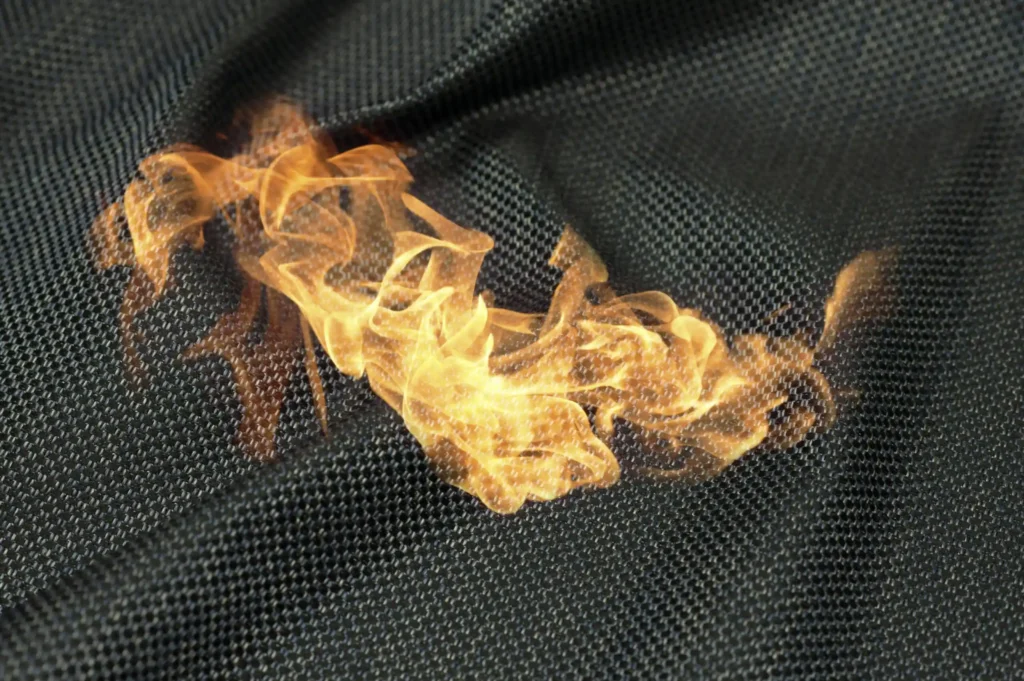
ونظرًا لأن الألياف البازلتية لا تحترق أو تطلق غازات سامة، فإنها تُستخدم على نطاق واسع في التطبيقات الحرجة للسلامة:
- ألواح وأقمشة مقاومة للحريق
- مواد مقاومة للانفجار
- ملابس واقية من درجات الحرارة العالية
- حواجز الحماية من الحرائق الصناعية
تستفيد هذه التطبيقات من الألياف البازلتية عدم القابلية للاشتعال والثبات الحراري.
ألياف البازلت مقابل الألياف الأخرى
| المقارنة | ألياف البازلت | مواد أخرى | المزايا الرئيسية لألياف البازلت |
|---|---|---|---|
| الألياف البازلتية مقابل الألياف الفولاذية | لا يتآكل؛ خفيف الوزن؛ سهل التعامل معه | يمكن أن تتآكل الألياف الفولاذية؛ أثقل | متانة أفضل على المدى الطويل، خاصةً في البيئات العدوانية أو المسببة للتآكل |
| الألياف البازلتية مقابل الألياف الزجاجية | مقاومة قوية للمواد الكيميائية؛ ثبات في درجات الحرارة العالية | تتميز الألياف الزجاجية بمقاومة أقل للمواد الكيميائية والحرارة | عمر خدمة أطول في الظروف القاسية |
| الألياف البازلتية مقابل الألياف الاصطناعية (PP، PET) | قوة عالية؛ مقاومة ممتازة للحرارة | تتميز الألياف الاصطناعية بقوة أقل ومقاومة ضعيفة للحرارة | أكثر ملاءمة للتطبيقات الهيكلية والحاملة |
ملاحظة:
على الرغم من أن الألياف البازلتية توفر العديد من المزايا، إلا أنه يجب دائمًا اختيار أفضل مادة تقوية بناءً على متطلبات المشروع المحددةمثل البيئة وظروف التحميل والتكلفة وتوقعات عمر الخدمة.
كيفية اختيار ألياف البازلت المناسبة
يعتمد اختيار المنتج المناسب من الألياف البازلتية على عدة عوامل:
- نوع التطبيق (خرسانة، مركب، عازل)
- طول الألياف وقطرها
- القوة والمتانة المطلوبة
- الظروف البيئية
على سبيل المثال:
- ألياف بازلتية مقطعة مثالي لتسليح الخرسانة
- الألياف المستمرة أفضل للمواد المركبة
- نسيج البازلت يستخدم في التقوية الهيكلية
وبصفتنا شركة مُصنّعة، نوصي بالعمل عن كثب مع الموردين لمطابقة نوع الألياف مع استخدامك المحدد.
الخاتمة: لماذا تتمتع ألياف البازلت بمستقبل قوي في مجال الإنشاءات
ألياف البازلت ليست مجرد مادة أخرى. إنها تمثل تحولاً نحو حلول إنشاءات أقوى وأكثر متانة واستدامة.
من خلال خبرتنا في هذا المجال، يتبنى المزيد من المهندسين والمقاولين الألياف البازلتية لأنها توفر أداءً موثوقًا وعمر خدمة طويل وتكاليف صيانة أقل وفوائد بيئية.
ومع تنامي الطلب على البنية التحتية وزيادة صرامة المعايير البيئية، من المرجح أن تلعب الألياف البازلتية دورًا أكبر في مستقبل البناء.
هل تبحث عن مورد موثوق لألياف البازلت؟
إذا كنت تسعى للحصول على الألياف البازلتية للاستخدامات الإنشائية أو الصناعية، فإن اختيار الشركة المصنعة المناسبة أمر بالغ الأهمية.
تينابريكس يوفر:
- منتجات متناسقة الجودة
- حلول الألياف المخصصة حسب الطلب
- الدعم الفني القائم على الخبرة الحقيقية للمشروع
لا تتردد في تواصل معنا لمناقشة احتياجات مشروعك - نحن هنا لمساعدتك في بناء هياكل أقوى وأكثر متانة.