









Reduce cracking. Improve durability. Build residential concrete slabs that perform better from placement to long-term service.
PROJEKTLÖSUNGEN
Fiber Reinforcement Solutions for Residential Slabs
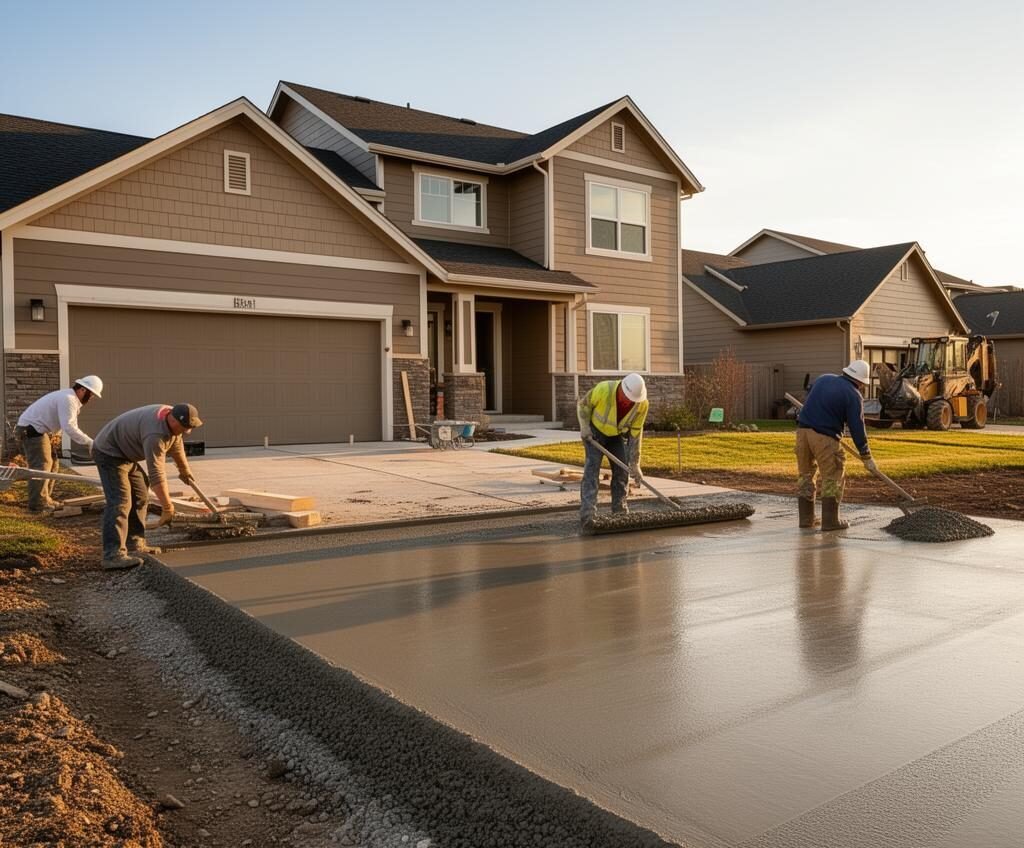
BUILT FOR RESIDENTIAL CONCRETE
Better Crack Control Starts Inside the Concrete
Residential slabs such as driveways, patios and foundations are constantly exposed to environmental changes and daily loads. Proper fiber reinforcement helps improve concrete performance from the very beginning.
ONE SLAB. TWO LEVELS OF REINFORCEMENT.
01 MICRO
Early-age crack control

02 MACRO
Toughness & post-crack performance

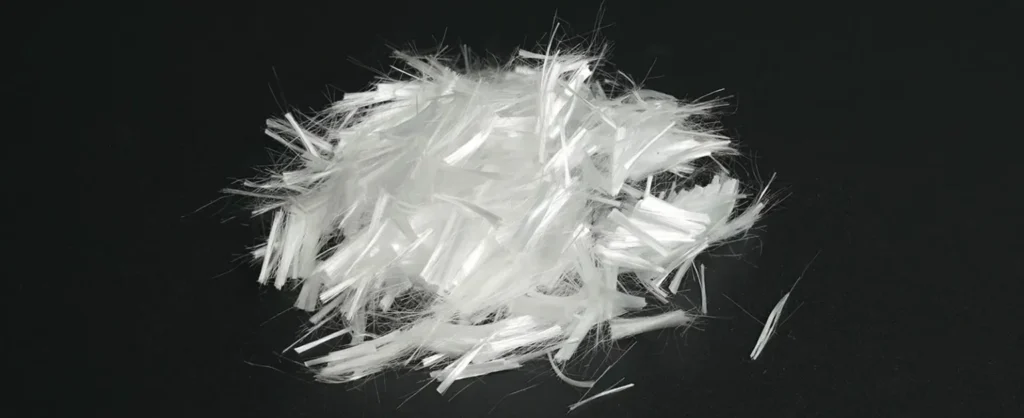
TenaBrix® POLYPROPYLENE SYNTHETIC MICROFIBER
Polypropylen-Synthetik-Mikrofaser
Control Early-Age Cracking
TenaBrix® Polypropylene Synthetic Microfiber consists of extremely fine monofilament fibers that disperse throughout the concrete mix to help control plastic shrinkage cracking during the early curing stage.
≥ 500 MPa
Zugfestigkeit
3-25 mm
Verfügbare Längen
0.6-0.9 kg/m³
Typische Dosierung
TenaBrix® POLYPROPYLENE SYNTHETIC MACROFIBER
Synthetische Polypropylen-Makrofaser
Reinforcement for Higher Performance
For projects requiring greater toughness and post-crack performance, TenaBrix® Synthetic Macrofiber provides a larger, engineered polypropylene reinforcement system for concrete slabs.
≥ 450 MPa
Zugfestigkeit
36–54 mm
Verfügbare Längen
100%
virgin copolymer / polypropylene

Product Selection
Choose the Right Fiber for Your Residential Slab

HOW IT WORKS
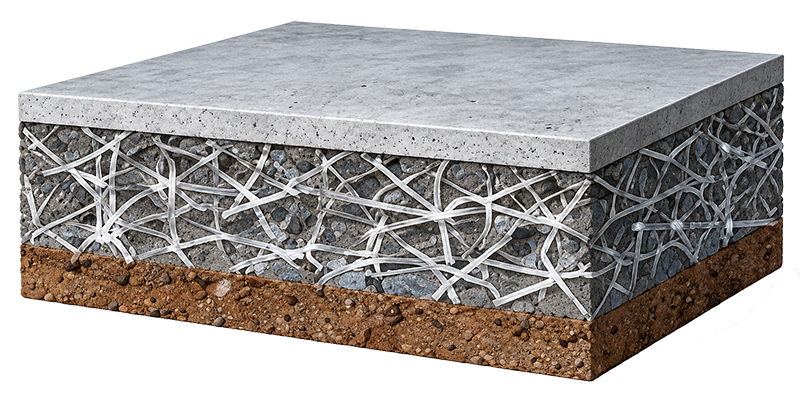
Reinforcement in Every Direction
Fibers disperse throughout the concrete matrix to help control early-age cracking and improve overall slab performance.
TYPICAL APPLICATIONS
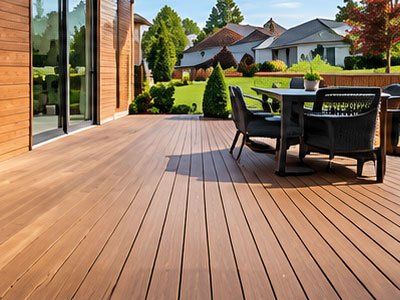
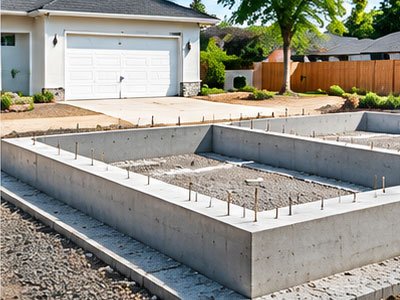
Residential Concrete Applications



CONSTRUCTION GUIDELINES
Simple Steps for Successful Fiber Reinforcement
Fiber dosage should be confirmed through trial mixing based on concrete mix design, construction conditions and performance requirements.
KEY CONSIDERATIONS
Key Construction Considerations
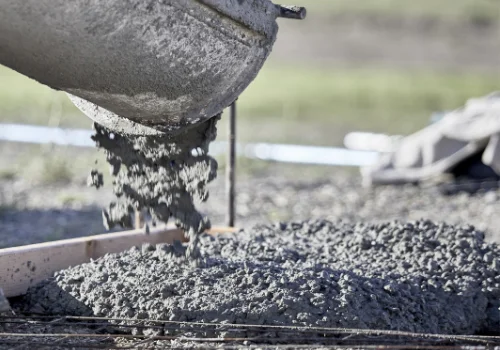
1.Priority is given to the dry mixing method: fiber+aggregate dry mixing for 30 seconds → cement/admixture mixing for 30 seconds → water mixing for ≥ 2 minutes.
2.It is forbidden to put wet material directly to avoid fiber agglomeration.
1.The vibration time is extended by 10-15 seconds to ensure uniform fiber distribution.
2.The timing of plastering needs to be advanced: finish before the first set (fibers accelerate the loss of water from the surface)
3.Avoid excessive wiping to cause fibers to float
1.When the wind speed is >5m/s or the temperature is >30℃:
✓ Immediately cover with plastic film to retain water
✓ Add 15-20% more
2.Winter construction: low-temperature-resistant modified fiber (-20 ℃ does not break)
Statement:
WARUM TENABRIX WÄHLEN
More Than Fiber. A Complete Concrete Reinforcement Solution.
HÄUFIG GESTELLTE FRAGEN
Residential Slabs FAQ
PP fibers cannot completely prevent concrete cracking; they only inhibit early-stage plastic micro-cracks and cannot withstand structural cracks caused by loads or thermal shrinkage.
The recommended dosage of PP micro-fibers for residential floor slabs is 0.6–0.9 kg/m³; the upper limit should be used in conditions of high wind and high temperature.
Synthetic micro-fibers cannot replace steel reinforcement and provide no structural load-bearing capacity.
Coarse fibers should be selected when the goal is to control macroscopic cracks in hardened concrete and enhance toughness (e.g., for flooring or shotcrete).
Micro-fibers and coarse fibers can be used in combination—micro-fibers control early-stage micro-cracks while coarse fibers restrain wider cracks at later stages—but trial mixes are required beforehand.
To prevent fiber clumping: slowly disperse the fibers along with the aggregates while the mixer is running, perform a dry mix first, extend the mixing time appropriately, and strictly avoid dumping in the entire bag at once.