من المتوقع أن تتحمل أرضيات المستودعات الأحمال الثقيلة وحركة الرافعات الشوكية المستمرة وأنظمة أرفف المنصات والعمليات الصناعية اليومية. وعندما تتشقق الأرضيات الخرسانية، فإنها لا تؤثر على المظهر فحسب، بل يمكن أن تؤدي أيضًا إلى إصلاحات مكلفة وتوقف الإنتاج ومخاطر تتعلق بالسلامة.
لحسن الحظ، يمكن الوقاية من معظم تشققات الأرضيات الخرسانية من خلال التخطيط السليم والمواد عالية الجودة وطرق البناء الصحيحة.
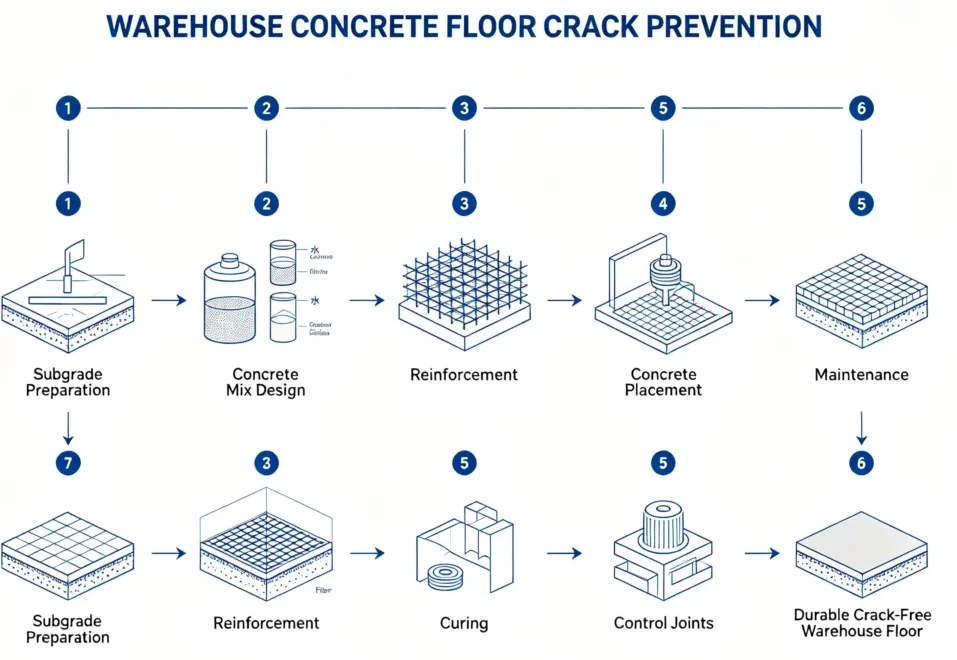
في هذا الدليل، سنشرح لماذا تتشقق أرضيات المستودعات الخرسانية، وكيفية الوقاية من أنواع التشقق المختلفة، وما حلول التسليح الأكثر فعالية للمباني الصناعية الحديثة.

لماذا تتشقق أرضيات المستودعات؟
الخرسانة تتشقق. هذا ما تفعله بطبيعتها. لكن أرضيات المستودعات تتشقق أكثر من معظم الأرضيات — ولأسباب محددة وقابلة للتنبؤ. فيما يلي الأسباب الخمسة الرئيسية لتشققات أرضيات المستودعات:
1. التشقق الانكماشي اللدن (أول 24 ساعة)
عندما تجف الخرسانة الطازجة بسرعة كبيرة — عادةً بسبب الرياح أو الحرارة أو انخفاض الرطوبة — ينكمش السطح بشكل أسرع من الخرسانة الموجودة تحته. والنتيجة؟ شبكة من التشققات الضحلة التي تظهر خلال ساعات من الصب، قبل أن تتصلب الخرسانة حتى.
هذا هو السبب الأول للتشقق المبكر في بلاطات المستودعات، ويمكن الوقاية منه تمامًا باستخدام الألياف المناسبة.
2. التشقق الانكماشي الجاف (أسابيع إلى أشهر)
مع تصلب الخرسانة وفقدانها للرطوبة بمرور الوقت، فإنها تنكمش. إذا كانت البلاطة مقيدة — بالجدران أو الأعمدة أو طبقة الأساس — فإن الانكماش يخلق شدًا داخليًا. وفي النهاية، لا بد أن يحدث شيء. الخرسانة تتشقق.
3. التشقق الناتج عن الأحمال (مستمر)
تحمل أرضيات المستودعات أحمالًا ثقيلة ومتكررة: الرافعات الشوكية والمنصات المحملة وأنظمة الأرفف. بمرور الوقت، تؤدي هذه الأحمال إلى انثناء البلاطة. وبدون تسليح، تنمو التشققات الصغيرة لتصبح كسورًا كبيرة.
4. فشل المفاصل
مفاصل البناء ومفاصل التحكم هي نقاط ضعف بحكم التصميم. ولكن عندما تتقشر المفاصل أو تتشقق أو تنزاح تحت حركة الرافعات الشوكية، فإنها تصبح نقطة البداية لفشل أكبر في الأرضية.
5. مشاكل طبقة الأساس
إذا استقرت الأرضية تحت البلاطة بشكل غير متساوٍ، تفقد البلاطة دعمها وتتشقق تحت وزنها الذاتي. لا يمكن للألياف إصلاح سوء تحضير الأرضية، لكنها يمكن أن تساعد في تجسير مشاكل الهبوط الطفيفة.

كيف تمنع الألياف الاصطناعية كل نوع من أنواع التشقق
إليك النقطة الرئيسية التي يغفل عنها معظم الناس: ألياف مختلفة تمنع أنواعًا مختلفة من التشققات. لا توجد “ألياف سحرية” واحدة تتعامل مع كل شيء.
الألياف الدقيقة: خط دفاعك الأول
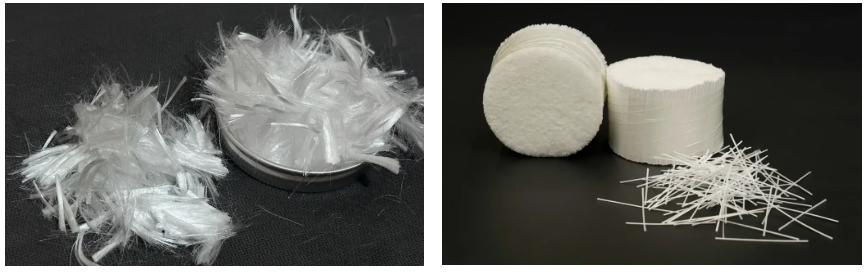
تعمل الألياف الاصطناعية الدقيقة (عادةً البولي بروبيلين، بطول 6–19 مم) في أول 24 ساعة. فكّر فيها كشبكة مجهرية تحافظ على تماسك الخرسانة الرطبة أثناء كونها لا تزال طرية.
- ما تمنعه: التشقق الانكماشي اللدن — تلك التشققات السطحية المبكرة
- كيف تعمل: تتوزع الألياف عبر مصفوفة الخرسانة وتقاوم قوى الشد التي تسبب تمزق السطح أثناء جفافه
- الجرعة: 0.9 كجم/م³ كافية لمعظم بلاطات المستودعات
- الأثر على التكلفة: ضئيل — عادةً أقل من 1.50 دولار لكل متر مكعب من الخرسانة
الألياف الدقيقة تشبه إضافة حديد التسليح لليوم الأول من عمر الخرسانة. وبمجرد تصلب الخرسانة، تكون مهمة الألياف الدقيقة قد اكتملت إلى حد كبير — ولكن إذا لم تكن موجودة، فإن الضرر يكون قد أصبح دائمًا بالفعل.
الألياف الكبيرة: تأمين إنشائي
تعمل الألياف الاصطناعية الكبيرة (البولي بروبيلين، 40–60 مم، بمقطع بارز) بعد تصلب الخرسانة. وهي التسليح طويل الأمد الذي يمنع التشققات من التفتح على مدى سنوات من حركة الرافعات الشوكية.
- ما تمنعه: تشققات الانكماش الجاف والتشققات الناتجة عن الأحمال
- كيف تعمل: عندما يبدأ تشقق في التكون، تجسر الألياف الكبيرة عبره وتحافظ على تماسك الخرسانة. تبقى البلاطة قطعة واحدة بدلاً من أن تنفصل
- الجرعة: 4–7 كجم/م³ لأرضيات المستودعات (5 كجم/م³ هو المعدل الأمثل لمعظم التطبيقات)
- ما تحل محله: شبكة الأسلاك الملحومة التقليدية — بتكلفة تركيب مماثلة أو أقل. للحصول على مقارنة مفصلة، راجع مقالتنا حول الألياف الكبيرة مقابل الألياف الفولاذية للأرضيات الصناعية.
إذا كانت الألياف الدقيقة هي شبكة الأمان لليوم الأول، فإن الألياف الكبيرة هي شبكة الأمان للعشرين سنة القادمة. في كل مرة تمر رافعة شوكية فوق تشقق صغير، تحافظ الألياف الكبيرة على تماسكه وتمنعه من النمو.
استخدام كليهما معًا: النهج الهجين
بالنسبة لأرضيات المستودعات، أفضل ممارسة هي استخدام كليهما. إليك السبب:
|
الألياف الدقيقة فقط |
الألياف الكبيرة فقط |
هجين (دقيقة + كبيرة) |
| تمنع التشققات السطحية المبكرة |
✅ |
❌ |
✅ |
| تمنع التشققات الإنشائية طويلة الأمد |
❌ |
✅ |
✅ |
| تحل محل الشبكة الفولاذية |
❌ |
✅ |
✅ |
| تتحمل حركة الرافعات الشوكية |
❌ |
✅ |
✅ |
| Extra cost vs plain concrete |
~$1.50/m³ |
~$6–9/m³ |
~$7–10/m³ |
| Recommendation |
Not enough alone |
جيد |
Best practice |
In many warehouse projects, a hybrid steel fiber and polypropylene fiber system adds approximately $7–10 per cubic meter of concrete (depending on fiber dosage and local material prices). For a typical 200 mm warehouse slab, that’s about $1.40–2.00 per square meter—far less than repairing cracked floors, where epoxy injection typically costs $15–50 per linear meter of crack and full slab replacement can exceed $50–100 per square meter. For exact dosage rates by application, check our concrete fiber dosage guide.
5 Practical Tips to Get the Most Out of Fiber in Your Warehouse Floor
1. Add Fiber to the Mixer the Right Way
Don’t add fiber directly to dry materials. Instead, add it after the aggregates and about 80% of the mixing water has been added. Mix for at least 90 seconds (or according to the fiber manufacturer’s recommendations) to ensure even fiber distribution and prevent fiber balls.
2. Don’t Skip Micro Fiber to Save a Few Dollars
Micro polypropylene fiber typically adds only a few dollars per cubic meter to the concrete cost, but it plays a critical role in controlling early-age plastic shrinkage cracks. Macro fiber improves the concrete’s structural performance after it hardens, while micro fiber helps reduce cracking during the first few hours after placement. Skipping micro fiber to save a small amount of money can result in much higher repair costs later.
3. Optimize Joint Spacing with Proper Design
Depending on the slab design and fiber dosage, macro fiber reinforcement may allow joint spacing to increase from the typical 4–6 meters to 6–8 meters. Fewer joints mean fewer potential weak points, lower maintenance costs, and a longer-lasting floor. However, joint spacing should always be determined by a qualified structural engineer based on project requirements.
4. Cure the Concrete Properly
Fiber reinforcement is not a substitute for proper curing. Keep the concrete surface moist for at least 7 days, or apply a suitable curing compound immediately after finishing. Fiber helps control cracks caused by internal stresses, while proper curing minimizes surface shrinkage and improves concrete strength and durability.
5. Run a Trial Batch Before Full-Scale Placement
Before placing hundreds or thousands of cubic meters of concrete, perform a small trial batch using your actual mix design and fiber dosage. Evaluate workability, finishability, and fiber distribution to identify any issues before construction begins. A short trial can help prevent costly delays, repairs, or rework on the job site.
Common Questions About Warehouse Floor Fiber
Can synthetic fiber completely replace steel mesh in a warehouse floor?
In most warehouse and distribution center applications — yes. Macro synthetic fiber at 5–7 kg/m³ provides equivalent or better crack control than traditional mesh, with faster installation and lower labor costs. The exception is suspended slabs or slabs on piles, where structural engineering requirements may still require steel reinforcement.
Will fiber affect the surface finish of my polished floor?
Micro fiber at standard dosages has no visible effect on surface finish. Macro fiber can occasionally cause minor fiber protrusion at the surface, but this is manageable with proper finishing techniques. For polished concrete floors, we recommend micro fiber at 0.9 kg/m³ as the primary reinforcement.
How much does it cost to add fiber to a warehouse floor?
For a typical hybrid fiber system (micro + macro), expect to add approximately $7–10 per cubic meter of concrete. For a 200 mm-thick slab, that equals about $1.40–2.00 per square meter. In many projects, this is less than the cost of welded wire mesh materials alone, even before considering the labor and time savings from eliminating mesh installation.
Do building codes approve fiber reinforcement?
Synthetic fiber reinforcement is recognized by ACI 544, EN 14889-2, and ASTM C1116. It’s widely accepted for slab-on-grade applications. For structural slabs, check with your local building code and structural engineer.
My warehouse floor already has cracks. Can fiber help?
Fiber is a preventive measure, not a repair product. If your floor already has cracks, you’ll need epoxy injection, routing and sealing, or a bonded overlay. But if you’re pouring a new floor or an overlay on top of the existing one, fiber in the new concrete will prevent the cracks from coming back.
Ready to Stop Cracks Before They Start?
The right fiber specification depends on your slab thickness, load requirements, joint layout, and sub-base conditions. At TenaBrix, we’ve supplied fiber for warehouse floors across 30+ countries — from small logistics facilities to major distribution centers.
Get a free fiber recommendation for your warehouse floor
Send us your project details and we’ll provide a specific dosage recommendation, cost estimate, and technical data sheet — usually within 24 hours.