BLOGS

PP Multifilament Yarn for Industrial Textiles: Applications, Benefits & Selection Guide

An industry-focused guide to polypropylene multifilament yarn for industrial ropes, webbing, geotextiles, FIBC components and technical fabrics, including selection criteria and safety considerations.

|
Blog

PP Multifilament Yarn for Industrial Textiles: Applications, Benefits & Selection Guide


For industrial textile buyers, selecting polypropylene multifilament yarn starts with the finished product—not a single yarn strength number. A rope producer, woven-webbing manufacturer and FIBC component supplier can all work with polypropylene (PP), yet each requires a different balance of yarn count, tenacity, elongation, dimensional stability and processability.

TenaBrix has expanded its website’s industrial-fiber coverage with a dedicated Polypropylen-Multifilamentgarn product page. This industry guide explains where continuous-filament PP yarn fits in technical textile manufacturing, which specifications matter most and why end-product testing remains essential.

Key takeaway: PP multifilament is an attractive lightweight, low-moisture-absorption option for many industrial textiles. However, yarn grade, UV exposure, temperature, creep and the required safety performance must be assessed for the actual end use.

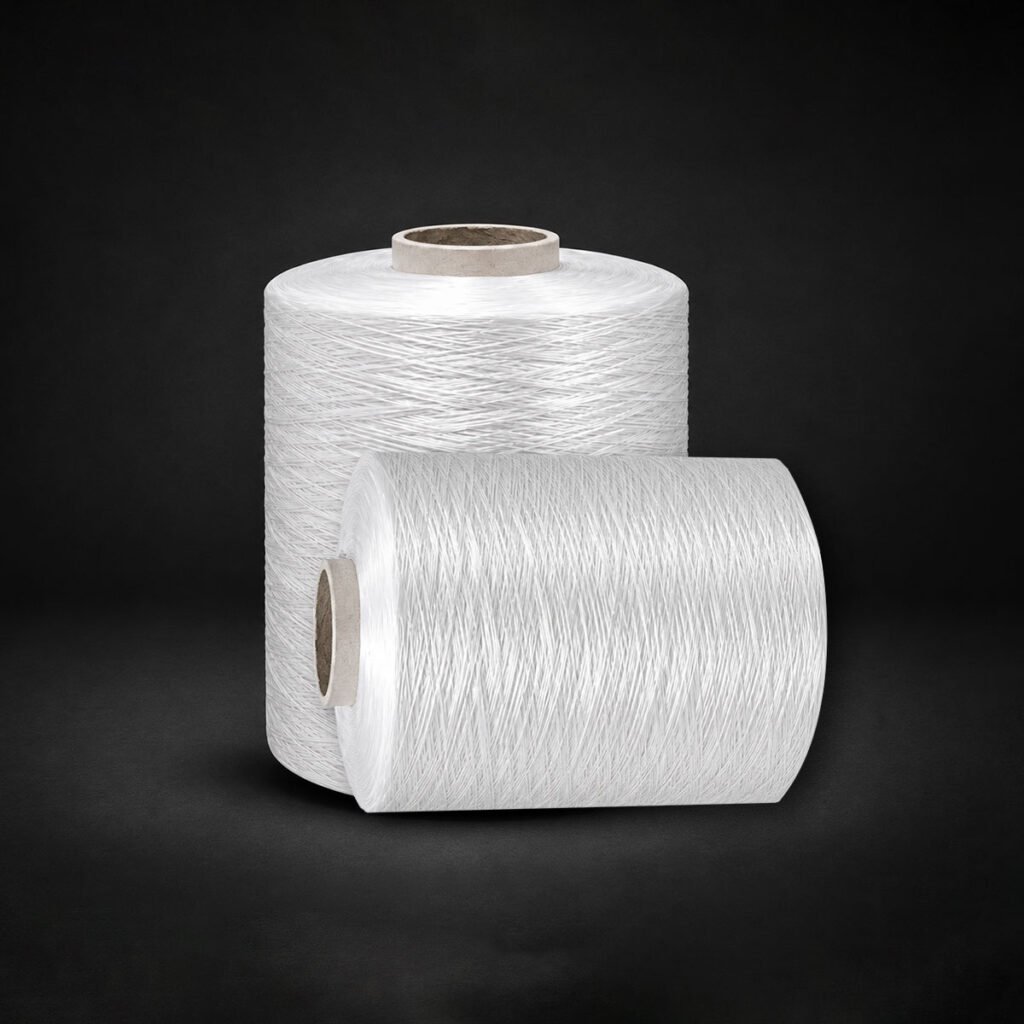
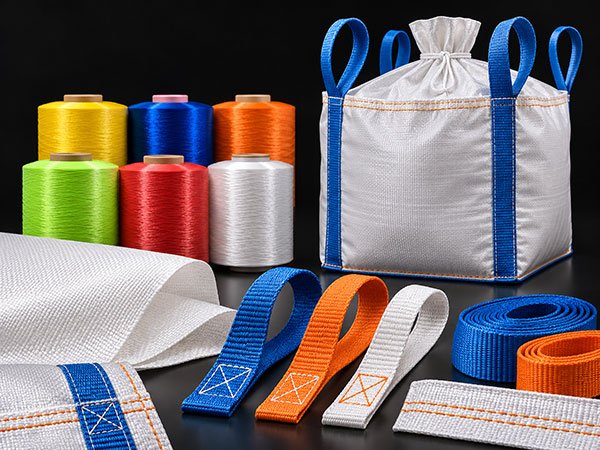
Polypropylen-Multifilament-Garn-004

What Is Polypropylene Multifilament Yarn?

Polypropylene multifilament yarn is made by bringing together multiple continuous PP filaments to form one yarn bundle. Melt spinning and drawing create the filaments, while downstream processing can produce flat, twisted or air-intermingled constructions. Filament count, linear density, twist and finishing influence the way a yarn runs through weaving, braiding or rope-making equipment.

Polypropylene has a relatively low density of approximately 0.91 g/cm³ and absorbs very little moisture. These properties help explain its use in lightweight cordage, industrial webbing and other technical textile constructions. Resistance to many common acids and alkalis can be useful, although compatibility depends on the specific chemical, concentration, temperature and exposure duration.

The advantages are not universal. Unprotected PP can lose performance after prolonged UV exposure; sustained loads can cause creep; and temperatures that are routine for some polyester processes may be unsuitable for PP. Buyers should therefore distinguish a material’s general characteristics from the tested performance of a particular yarn grade.

Where Is PP Multifilament Yarn Used in Industrial Textiles?

1. Industrial Ropes, Cords and Braided Lines

Continuous PP filament yarn can be twisted or braided into ropes and cords for handling, bundling, marine-related and general industrial applications. Low density supports lightweight constructions and can provide buoyancy in suitable rope designs. The relevant design questions include required breaking load, abrasion, knot or splice behavior, wet handling, service temperature and long-term exposure.

For rope products, refer to the current ISO 9554:2019 general specifications together with the applicable product-specific rope standard. A yarn’s nominal tenacity is not a substitute for testing the assembled rope.

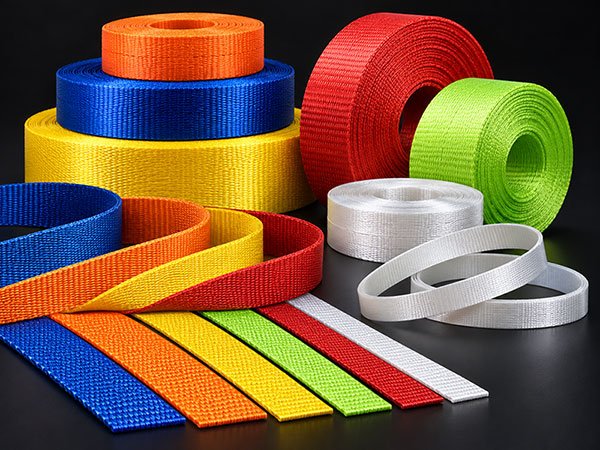
2. Narrow Woven Webbing, Straps and Binding Tapes

In woven webbing and industrial straps, manufacturers often prioritize consistent yarn linear density, controlled elongation, even color and reliable performance through warping and weaving. The optimal yarn twist or air-intermingling level depends on the weaving equipment and desired fabric structure.

Webbing used in load-bearing or safety-critical assemblies requires evaluation of the finished construction—including sewing, edges, hardware and attachment points—not simply a yarn datasheet.

3. Geotextiles and Other Technical Fabrics

PP multifilament yarn can be selected for woven technical fabrics where low weight, low moisture uptake and chemical compatibility are desirable. Potential applications include certain geotextiles, filtration or separation textiles and industrial fabrics. Whether a particular construction is suitable depends on tensile properties, puncture resistance, hydraulic behavior, durability and the project’s specified testing requirements.

Polypropylene-Multifilament-Yarn-Applications-001

Industrial ropes and cordage

Polypropylene-Multifilament-Yarn-Applications-002

Woven webbing and straps

Polypropylene-Multifilament-Yarn-Applications-003

Geotextiles and technical fabrics

4. FIBC Components and Industrial Packaging

Flexible intermediate bulk containers (FIBCs), commonly called bulk bags, may incorporate woven components, sewing threads, cords or other textile elements. PP multifilament yarn may be evaluated for suitable component constructions, but the overall FIBC must meet its intended safe working load and applicable design and type-testing requirements.

ISO 21898:2024 covers materials, construction, testing and marking for FIBCs intended for non-dangerous goods. Supplying PP yarn does not establish FIBC compliance or certify lifting components. Bag makers must validate their complete product.

5. Nets, Braided Products and Specialty Textiles

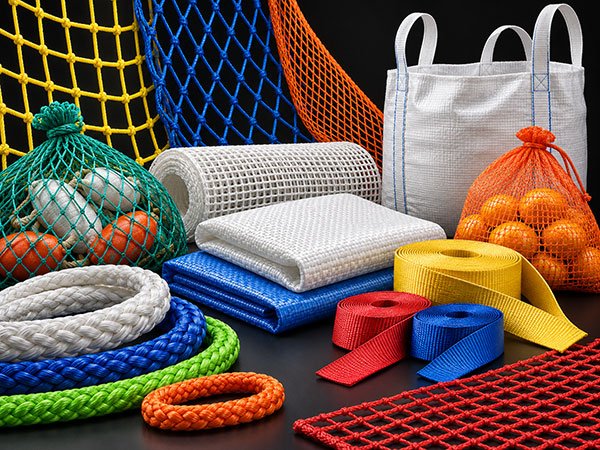
Netting, braided sleeves and other technical textile products can use PP yarn when the required hand feel, mass, dimensional stability and end-use durability are compatible with the chosen grade. Mesh size, yarn-to-yarn abrasion, knot stability, outdoor exposure and processing waste can all affect the final material choice.

For specialty production, sampling under actual machine conditions is often more informative than specifying the highest possible tenacity without reference to the manufacturing process.

Polypropylene-Multifilament-Yarn-Applications-004

FIBC-related industrial textile components

Polypropylene-Multifilament-Yarn-Applications-005

Industrial nets and braided products

Polypropylene-Multifilament-Yarn-Applications-006

Specialty industrial textiles

Key PP Multifilament Yarn Specifications Buyers Should Check

TenaBrix lists multiple configurations on its polypropylene multifilament yarn product page, including flat, twisted and air-intermingled options. The following items are practical discussion points for a sourcing inquiry rather than a universal guarantee for every supplied lot.

Selection factor Why it matters What to request
Linear density (denier) Influences yarn mass per length and textile construction Target denier and tolerance; TenaBrix lists 900D, 1100D, 1200D and 1300D configurations
Tenacity and breaking force Indicates load response of the tested yarn Grade-specific test method, average results and minimum acceptance criteria
Elongation at break Affects extension under load and compatibility with the end product Measured elongation and the full tensile test conditions
Construction Changes handling and cohesion during weaving, braiding or twisting Flat, twisted or air-intermingled; filament count and twist details
Thermal shrinkage Important during heat exposure and downstream processing Test temperature, duration and measured shrinkage
Color and UV stabilization Influences appearance and weathering behavior Approved shade, stabilization options and any relevant aging data
Winding and packaging Affects unwinding, handling and manufacturing downtime Package format, net weight, winding quality and pallet configuration

Specification note: TenaBrix’s published product page identifies typical values for selected characteristics, but individual performance depends on denier, construction and grade. Confirm the latest product datasheet and inspection requirements before placing an order.

Understanding Denier and Tenacity

Denier measures linear density: 1 denier equals 1 gram per 9,000 meters of yarn. A 900D yarn therefore has a nominal mass of 100 grams per 1,000 meters, excluding differences caused by tolerance and finishing. Denier is not a measure of strength on its own.

Tenacity expresses breaking force relative to linear density, making it more useful for comparing different yarn sizes when the test conditions are comparable. ASTM D2256/D2256M is a recognized method for evaluating tensile properties of yarns. For a purchase specification, ask for the exact standard edition, testing conditions and acceptance values.

How Does Polypropylene Compare With Polyester and Nylon Yarn?

PP is not automatically the best fiber for every technical textile. Polyester and nylon may offer advantages when the intended use prioritizes higher operating temperatures, certain abrasion or fatigue conditions, or a different combination of elongation and moisture behavior.

Consideration Polypropylene (PP) Polyester (PET) Nylon (PA)
Relative density Low; around 0.91 g/cm³ Higher; around 1.38 g/cm³ Higher; around 1.14 g/cm³
Moisture uptake Very low Niedrig Appreciable relative to PP/PET
Heat tolerance Generally lower Generally higher Grade-dependent; generally higher melting point than PP
UV/weathering Stabilization often needed for sustained exposure Grade and finish still matter Grade and stabilization still matter
Selection priority Lightweight, low moisture absorption and cost-performance Dimensional stability and temperature resistance Specific toughness, flexibility or abrasion requirements

These are general material tendencies, not a ranking of finished-product performance. The final comparison should use equivalent construction, conditioning and application-specific tests.

A Five-Step Procurement Checklist for Industrial PP Yarn

  1. Define the end use. Specify whether the material will become rope, webbing, technical fabric, packaging component or another product, and identify any mandatory standard.
  2. Share the manufacturing process. Provide machine type, operating speed, intended twist or intermingling, yarn size and any heat-setting or finishing conditions.
  3. Set measurable acceptance criteria. Agree on denier tolerance, tensile test method, minimum performance, elongation, appearance and winding quality.
  4. Validate under real conditions. Conduct trial weaving, braiding or rope-making, followed by the relevant finished-product tests. For outdoor service, include appropriate UV and weathering evaluation.
  5. Confirm repeatability and logistics. Review sample-to-bulk consistency, color references, spool format, labels, cartons and pallet handling before scaling orders.

Frequently Asked Questions About Polypropylene Multifilament Yarn

Is PP multifilament yarn the same as polypropylene monofilament?

No. Multifilament yarn combines multiple fine continuous filaments into a bundle. Monofilament is a single continuous filament. They can differ substantially in flexibility, surface behavior, handling and end-use suitability.

What denier is suitable for rope or webbing production?

There is no single best denier. Select it together with yarn tenacity, elongation, the number of ends, product construction and required finished-product performance. TenaBrix lists 900D, 1100D, 1200D and 1300D options, with configurations that may be customized following technical review.

Can PP yarn be used in outdoor textile applications?

Potentially, yes, when an appropriate stabilized grade is selected and the finished product is validated for the expected UV exposure, temperature, load and service life. Standard PP should not be assumed to be UV-resistant without supporting evidence.

Can polypropylene yarn replace polyester or nylon in an existing product?

Not on a one-to-one assumption. Changes in density, creep, elongation, heat response and friction can affect the design. A controlled production trial and the required end-use testing are important before substitution.

Does PP yarn alone make an FIBC or lifting strap compliant?

No. Applicable standards generally address the complete manufactured article and its assembly, construction and test performance. Verify compliance using the relevant end-product standard and qualified testing procedures.

Work With TenaBrix on a Grade-Specific PP Yarn Selection

For rope, webbing, geotextile and industrial-fabric manufacturers, the most useful yarn specification is one tied to the intended processing route and finished-product requirements. TenaBrix provides polypropylene multifilament yarn product information and can discuss application-specific configurations, color and packaging requirements.

Share your target denier, end use, machine details, desired performance and trial-quantity requirements with the TenaBrix team. A grade-specific technical discussion is the best starting point for a reliable manufacturing evaluation.

Related reading: Faserprodukte · Synthetic Fibers · Kontaktieren Sie TenaBrix

Technical references: ISO 9554:2019; ISO 21898:2024; ASTM D2256/D2256M. Standards are referenced for context, not as a claim of TenaBrix yarn or finished-product certification.

Need PP Yarn Samples or Technical Specifications?

Tell us your required denier, construction, application and delivery preferences. Our team can help identify specifications for further sampling and evaluation.


The previous news
Fibers for Precast Concrete: Types, Uses & Selection Guide
The next news
So wählen Sie einen Betonfaserlieferanten aus: 8 Prüfpunkte vor dem Kauf

Need technical support for your industrial building project?

Our team can help you choose the right fiber type and dosage.

Share This Blog

Blogs You Might Like


Industry Solutions

Fibers Designed Specifically For Construction Applications