










Understand the difference between concrete hardeners and fiber reinforcement, how each affects industrial concrete floors, and when a project may need both.
Concrete Hardener vs. Fiber Reinforcement: Differences, Uses & Selection Guide
In the Concrete Hardener vs. Fiber Reinforcement comparison, both materials are used in concrete construction, but they serve different purposes. A concrete hardener is generally applied to or incorporated into a concrete surface system to improve surface properties, while fibers are mixed into concrete to help control cracking or provide specified post-crack performance.
Choosing between a concrete hardener and fiber reinforcement is not simply a matter of which material is stronger. The right solution depends on whether the project needs a harder, more wear-resistant surface, improved crack control within the concrete, or both.
What Is a Concrete Hardener?
A concrete hardener is a material or treatment used to improve the hardness and wear resistance of a concrete surface. In industrial flooring, the term often refers to a dry-shake surface hardener applied to fresh concrete and worked into the surface during finishing. Other products, such as liquid chemical hardeners or densifiers, work differently and should not be treated as identical systems.
Depending on the product type and application method, a hardener may help create a denser, more abrasion-resistant surface. It is commonly considered for warehouses, factories, workshops, logistics facilities, and other floors exposed to regular traffic or surface wear.
What Is Fiber Reinforcement in Concrete?
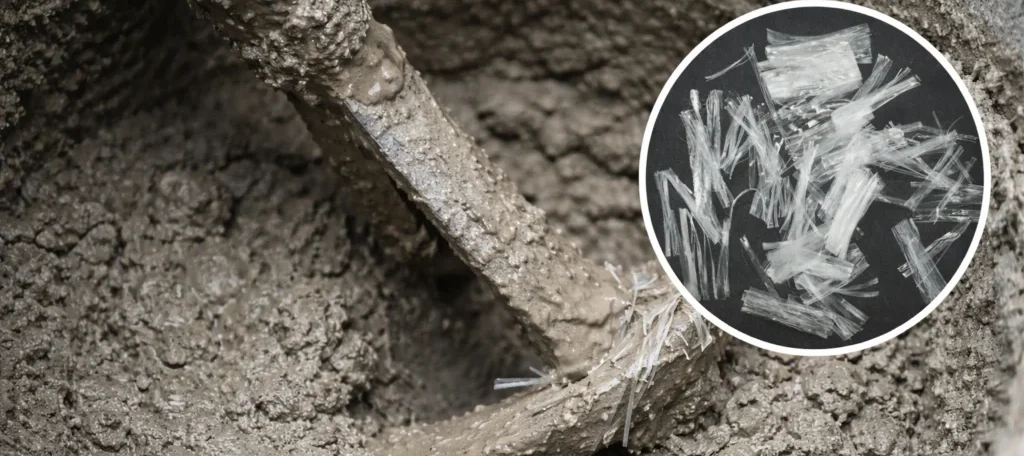
Fiber reinforcement involves adding discrete fibers to a concrete mixture. The fibers are distributed through the concrete and can help control cracking or contribute to post-crack behavior, depending on their material, geometry, dosage, and the performance requirements of the project.
Different fiber types have different functions. Synthetic microfibers are commonly used to help control plastic shrinkage cracking in the early stages. Synthetic macrofibers are designed for applications where crack bridging and residual performance are important. The suitability of any fiber should be confirmed through product specifications, relevant test data, and project-specific design.
Concrete Hardener vs. Fiber Reinforcement: Key Differences
| Comparison | Concrete Hardener | Fiber Reinforcement |
|---|---|---|
| Main purpose | Improve concrete surface hardness and wear resistance | Help control cracking or provide specified post-crack performance |
| Where it works | Primarily at or near the concrete surface, depending on product type | Distributed within the concrete mixture |
| Typical application stage | Applied during or after placement, according to the product system | Added during concrete batching or mixing |
| Common project concerns | Surface abrasion, wear, dusting, and finishing requirements | Plastic shrinkage, crack bridging, toughness, and residual performance |
| Key selection factors | Substrate, exposure, finishing method, and hardener type | Fiber type, geometry, dosage, dispersion, and required performance |
These materials are not direct substitutes. A surface hardener does not replace reinforcement designed to control cracking, and adding fibers does not automatically provide the surface hardness or abrasion resistance expected from a suitable hardener system.
Can Concrete Hardener and Fibers Be Used Together?
Yes. In many industrial floor designs, a surface hardener and fiber reinforcement may be specified together because they address different performance requirements. Fibers are incorporated into the concrete mixture, while the hardener is selected and applied as part of the floor’s surface-finishing system.
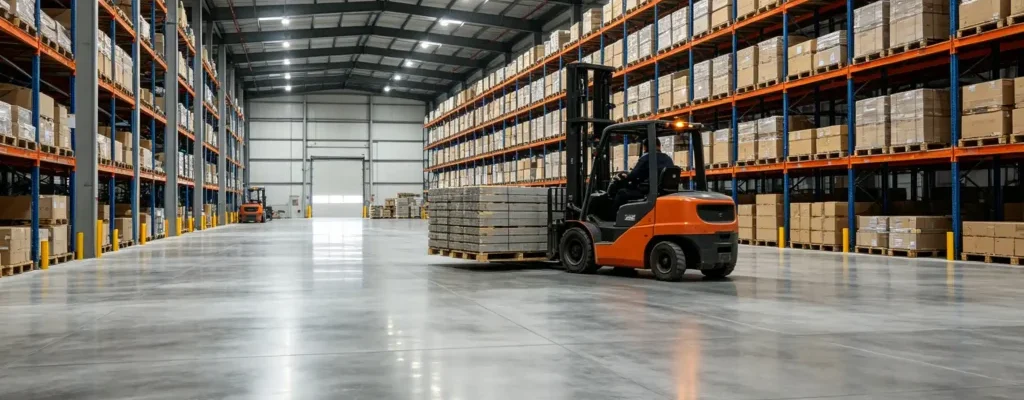
For example, a warehouse floor may need a concrete mixture designed to meet its crack-control and load requirements, as well as a surface treatment suitable for forklift traffic and abrasion. The exact combination depends on the floor design, concrete mix, finishing process, service conditions, and project specifications.
Using both does not remove the need for proper slab design, joint planning, curing, and construction quality control. Neither material can compensate for an unsuitable mix design or poor execution.
How to Choose the Right Solution for an Industrial Concrete Floor
1. Identify the main performance requirement
If the primary concern is surface wear, abrasion, or dusting, evaluate an appropriate concrete hardener or densifier system. If the concern is early-age cracking or post-crack behavior, assess a suitable fiber reinforcement system. Some projects require both.
2. Match the fiber type to its intended function
Do not select fibers by material name alone. Microfibers and macrofibers have different typical roles. Review fiber dimensions, geometry, mechanical properties, recommended dosage, and application-specific test results before making a selection.
3. Check compatibility with construction practices
Consider batching, mixing time, fiber dispersion, pumping, placing, screeding, and finishing. For surface hardeners, follow the manufacturer’s requirements for application timing, dosage or coverage, and finishing procedure.
4. Review specifications and test documentation
Ask suppliers for relevant technical data sheets, application instructions, and test reports. For fiber-reinforced concrete, confirm that the test method, dosage, concrete mixture, and reported performance are relevant to the intended floor design.
5. Confirm the design with the project team
Industrial floors must be designed for their actual loads, traffic, sub-base conditions, joint layout, and service environment. The project engineer should confirm the reinforcement strategy and surface-treatment specification.
Which Concrete Fibers Are Commonly Considered for Flooring?
The appropriate fiber depends on the required function and the performance evidence available for the proposed concrete system.
- Microfibre synthétique de polypropylène : commonly considered for controlling plastic shrinkage cracking in fresh concrete.
- Macrofibre synthétique de polypropylène : considered in selected floor designs where crack bridging and post-crack performance are required.
- Fibre macro-synthétique torsadée : a macro-synthetic option that should be assessed using its product geometry, technical properties, and relevant concrete test results.
- Polyester fiber: may be considered for specific concrete applications when its product characteristics and supporting data match the project requirements.
These fibers are not interchangeable, and no universal dosage or performance value applies to every project. Selection should be based on the product’s technical documentation and the floor’s engineering requirements.
Explore TenaBrix fiber products and review the relevant product information before specifying a fiber for your project.
Questions fréquemment posées
Does concrete hardener prevent cracking?
A concrete hardener is primarily intended to improve surface properties, such as hardness or wear resistance, depending on the product. It should not be relied on as a substitute for crack-control measures, suitable reinforcement, joint design, curing, or proper concrete practice.
Do fibers make concrete harder on the surface?
Fibers are mainly used to influence cracking behavior and, for some macrofiber systems, post-crack performance. They do not automatically provide the same surface-hardening effect as a specified hardener or densifier.
Can fibers replace a dry-shake concrete hardener?
No. Fibers and dry-shake surface hardeners serve different functions. Fibers are mixed into concrete, while a dry-shake hardener is applied to the fresh surface and incorporated during finishing. One should not be assumed to replace the other.
Should I use microfiber or macrofiber in an industrial floor?
It depends on the required performance. Microfibers are commonly used for early-age plastic shrinkage crack control, while macrofibers may be selected when crack bridging and post-crack performance are required. The final choice should follow the project design and relevant test data.
What information should I provide when asking for a fiber recommendation?
Share the floor thickness, application, expected loads and traffic, concrete mix information, placement method, crack-control objectives, and any project specifications. This helps the supplier identify relevant products and technical documentation.
Conclusion
Concrete hardeners and fiber reinforcement solve different problems. A suitable hardener system can improve surface wear performance, while an appropriately designed fiber-reinforced concrete mixture can help address cracking and post-crack requirements. For industrial floors, both may be part of the same specification.
The best selection starts with the project’s performance requirements, followed by a review of product documentation, relevant test results, and engineering design.
Looking for fiber reinforcement for an industrial flooring project? Contactez TenaBrix to discuss your application and request product information.
Blogs You Might Like
Fibre de polypropylène fibrillée pour béton : Comment…
Découvrez comment la fibre de polypropylène fibrillée renforce le béton, contrôle la fissuration au jeune âge, se compare aux monofilaments et aux macro…

Polypropylene Fiber for Infrastructure and Industr…
The Ultimate Guide to Polypropylene (PP) Fiber: Why It’s the Gold Standard for Modern Infrastructure…


