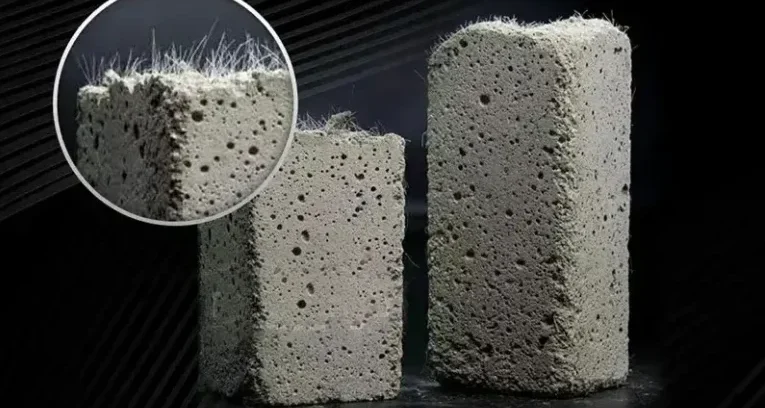
Choosing the right fibres pour béton préfabriqué starts with the job the fiber needs to do. A thin architectural panel, a concrete block, a utility component, and a precast element designed for residual flexural performance do not have the same reinforcement requirements. Fiber type, dosage, mix design, production equipment, and acceptance tests all need to work together.
This guide compares polypropylene microfibers, fibrillated polypropylene fibers, and macro-synthetic fibers for precast applications. It also explains how to approach the fiber reinforced concrete mix ratio, how to run plant trials, and what technical information to request from a precast concrete fiber supplier.
If you are reviewing fiber options for a specific product, see TenaBrix Precast Concrete Solutions or contact our team with your product dimensions, mix details, and performance requirements.
Why Use Fibers in Precast Concrete?
Precast concrete is produced under controlled plant conditions, but cracking and local damage can still occur during mixing, casting, vibration, curing, demoulding, lifting, storage, and transportation. Fibre reinforcement can help address selected cracking and toughness requirements as part of a properly designed concrete mix and production process.
Contrôle de la fissuration précoce
Plastic shrinkage and settlement can cause cracks while concrete is still fresh. Fine polypropylene microfibres distributed through the mix can help reduce the formation and width of certain early-age cracks. The result depends on fibre geometry, dosage, concrete composition, evaporation conditions, and curing practice.
Improved cohesion and resistance to local damage
Precast products may be vulnerable to edge chipping, surface damage, and local cracking, especially around corners, openings, and thin sections. Suitable fibres may improve cohesion or impact-related behavior in some mixes. They do not replace correct mould design, release procedures, adequate curing, lifting design, or careful handling.
Post-crack performance where specified
Some precast applications require performance after the concrete has cracked. Engineered macro-synthetic fibres can bridge cracks and contribute to residual flexural performance. Where this contribution is included in structural design, selection and dosage must be supported by concrete-level test results and approval from the responsible engineer. Individual fibre tensile strength alone is not proof of structural performance.

Types of Fibers for Precast Concrete
Microfibres and macrofibres serve different purposes. Identify the required outcome first—early-age crack control, mix cohesion, or specified post-crack performance—then select a fibre that can be validated in the actual production mix.
| Fiber type |
Primary function |
Potential precast applications |
What to verify |
| Polypropylene monofilament microfiber |
Distributed early-age crack control |
Panels, blocks, small precast units, and general precast mixes |
Fibre length, dosage, dispersion, and relevant crack-control data |
| Fibrillated polypropylene fibre |
Network-like distributed reinforcement |
Precast products and cement-based mixes suited to its mesh structure |
Fibre opening, dispersion, workability, and surface finish |
| Polypropylene synthetic macrofibre |
Crack bridging and potential residual flexural performance |
Selected precast elements with defined post-crack requirements |
Residual flexural test results, fibre geometry, dosage, and design approval |
Polypropylene microfibers for early-age crack control
Polypropylene microfibres are fine synthetic strands that disperse throughout the concrete matrix. They are commonly used to help control plastic shrinkage cracking and may improve resistance to certain forms of impact-related surface damage. They are generally not a substitute for conventional structural reinforcement.
Explore TenaBrix Polypropylene Synthetic Microfiber for product information and available options.

Fibrillated polypropylene fibers for distributed reinforcement
Fibrillated fibres are produced with a split-film structure that forms a network of interconnected fibrils. When adequately opened and dispersed, this structure creates multiple contact points within the cementitious matrix. Performance depends on fibre design and whether the plant’s mixing sequence can distribute the fibres without clumping.
Learn more about TenaBrix Polypropylene Fibrillated Fiber.

Macro-synthetic fibers for crack bridging
Macro-synthetic fibres are larger than microfibres and are designed to bridge cracks and contribute to post-crack behavior. They may be evaluated for precast elements when the specification calls for residual flexural strength or toughness. Any structural contribution must be established through relevant concrete testing, engineering calculations, and project approval.
See TenaBrix Polypropylene Synthetic Macrofiber, including embossed and curved configurations.

Fiber Reinforced Concrete Mix Ratio for Precast: What Should You Consider?
There is no single fiber reinforced concrete mix ratio or universal fibre dosage that suits every precast product. The appropriate dosage depends on the fibre type and geometry, the concrete mixture, the required performance, product dimensions, and the production method. A dosage selected for plastic shrinkage control should not be assumed to provide the residual flexural performance required from a macrofibre.
Start with the base concrete mix
Establish the approved cementitious binder content, water-to-binder ratio, aggregate grading, admixture system, target workability, and strength class before introducing fibres. Record the baseline mix and its fresh and hardened properties so that the effect of fibre addition can be evaluated.
Use the fibre manufacturer’s dosage guidance as a trial starting point
Request the current Technical Data Sheet (TDS), recommended dosage range, and mixing instructions for the exact fibre product. Treat the supplier’s recommendation as a starting point for trials—not as a substitute for project specifications or mix validation. Do not transfer a dosage from microfiber to macrofibre, or from one fibre geometry to another, without technical justification.
Check workability and fibre dispersion
Fibre addition may influence slump or flow, cohesion, air content, consolidation, and surface finish. Check the mix using the plant’s actual mixer, batching sequence, vibration method, and casting procedure. Do not add uncontrolled water to recover workability; any adjustment should follow the approved mix-design process.
Validate the dosage against the required performance
For early-age crack-control applications, select a relevant crack-reduction test and define the acceptance criteria. For macrofibres intended to contribute to post-crack performance, assess residual flexural behavior using a suitable concrete beam test and the project specification. Record the fibre product, dosage, concrete constituents, mixing time, specimen preparation, and test results for each trial.
For a broader explanation of dosage considerations, read the TenaBrix concrete fiber reinforcement dosage guide. The dosage in any guide should still be checked against the specific fibre product and precast application.
How to Select the Right Fibre for a Precast Product
1. Define the precast element and its service conditions
Identify whether you are producing architectural panels, paving units, blocks, pipes, utility products, or another element. Consider dimensions, minimum section thickness, reinforcement layout, lifting points, handling loads, exposure conditions, and service requirements. These factors influence the fibre function that may be appropriate.
2. Identify the performance objective
If the main concern is plastic shrinkage cracking, evaluate a suitable microfiber. If the specification requires crack bridging, toughness, or residual flexural performance, evaluate a macro-synthetic fibre and establish measurable acceptance criteria. If the goal is improved mix cohesion, assess the fibre structure and its compatibility with the mix and production equipment.
3. Review production constraints
Confirm that the fibre can be added and dispersed within the plant’s batching cycle. Review mixer type, batch size, addition sequence, mixing time, workability, vibration, casting speed, demoulding time, and surface-finish requirements. A technically suitable fibre must also be practical for repeatable production.
4. Run representative plant trials
Use the actual raw materials and production equipment wherever possible. Check fibre dispersion, fresh-concrete consistency, consolidation, visible fibre clusters, surface appearance, demoulding behavior, and the hardened properties required by the specification. Document each trial so that successful settings can be repeated consistently.
5. Confirm the required technical evidence
For plastic shrinkage cracking, ASTM C1579 may be relevant where its scope and test conditions match the application. For macrofibres intended to contribute to residual flexural performance, ASTM C1609/C1609M may be used to evaluate concrete beam behavior. ASTM C1116/C1116M addresses fibre-reinforced concrete, while EN 14889-2 covers polymer fibres for concrete. Confirm the current edition, product classification, and project-specific requirements with the specifier or engineer.
Mixing and Quality Control in Precast Production
- Follow product-specific addition instructions: Confirm the recommended point of fibre addition with the supplier and verify it in plant trials.
- Control mixing time: Establish a repeatable mixing sequence that achieves dispersion without disrupting production.
- Monitor fresh concrete: Check workability, cohesion, air content where required, and consolidation behavior.
- Inspect fibre distribution: Look for fibre balls, clusters, or uneven distribution in trial batches and finished units.
- Maintain batch traceability: Record product name, batch number, dosage, delivery details, and quality-control results.
- Keep curing and handling consistent: Fibre reinforcement does not replace correct curing, demoulding, lifting, or storage procedures.
Can Synthetic Fibres Replace Steel Reinforcement in Precast Concrete?
Not automatically. Micro synthetic fibres are generally used for non-structural crack-control purposes and should not be treated as a replacement for reinforcing bars or welded wire reinforcement. Macro-synthetic fibres may be designed to contribute to residual performance in selected applications, but any reduction or replacement of conventional reinforcement requires structural design calculations, relevant test data, compliance with applicable codes, and approval from the responsible engineer.
Where reinforcement is required to resist primary design loads, follow the project drawings and specifications. Fibre reinforcement should be treated as a designed component of the system, not as a shortcut around structural requirements.
What Should You Ask a Precast Concrete Fibre Supplier?
When comparing a precast concrete fibre supplier, request information that helps your technical and purchasing teams assess product suitability and supply consistency:
- Which fibre type is appropriate for the product and the cracking or performance requirement?
- Can you provide a current TDS, Safety Data Sheet (SDS), and relevant test reports?
- Do the test reports identify the fibre type, dosage, concrete mix, and test method?
- Can the fibre be trialed with our cement, aggregates, admixtures, and mixing equipment?
- What addition sequence, mixing time, and dosage range do you recommend for trial batches?
- Are customized fibre lengths, packaging, or OEM supply options available?
- How are product batches identified and quality records maintained?
Questions fréquemment posées
What are the best fibres for precast concrete?
There is no single best fibre for every precast product. Polypropylene microfibres are commonly considered for early-age crack control, fibrillated fibres for mixes suited to their network structure, and macro-synthetic fibres for applications requiring evaluated post-crack performance. Choose according to the product specification and trial results.
What is the correct fibre dosage for precast concrete?
The correct dosage depends on fibre type, geometry, concrete mix, production process, and required performance. Start with the exact product manufacturer’s guidance, then confirm the dosage through representative mix trials and relevant tests. Structural applications require design criteria established by the responsible engineer.
Do polypropylene fibres increase compressive strength?
Polypropylene fibres are mainly selected for cracking-related behavior, toughness, or impact-related performance, depending on the fibre type. They should not be specified on the assumption that they will automatically increase compressive strength. Verify the properties required by the project through appropriate concrete testing.
Can fibres prevent cracks during demoulding?
Fibres may help improve cohesion or resistance to certain types of cracking and local damage, depending on the product and mix. They cannot eliminate damage caused by premature stripping, insufficient concrete strength, unsuitable mould release, poor lifting arrangements, or improper handling.
What documents should be requested before purchasing concrete fibres?
Request the TDS, SDS, relevant test reports, product and batch identification, recommended addition instructions, and packaging details. For performance-critical applications, ask for test data that matches the intended fibre type, dosage, concrete mixture, and test method.
Discuss Your Precast Concrete Fibre Requirements with TenaBrix
Choosing fibres for precast concrete involves more than comparing product names. The right recommendation depends on your product type, concrete mix, section dimensions, production equipment, target performance, and quality-control requirements.
TenaBrix supplies polypropylene synthetic fibres for concrete applications, including microfiber, fibrillated fibre, and macrofibre options. Share your precast product type, mix information, target performance criteria, and expected purchasing volume with our team. We can help you review suitable fibre options and discuss samples, technical documents, and packaging requirements.
Contact TenaBrix to request a sample, TDS, SDS, or project-specific quotation.
Technical References