
 FR
FR  EN
EN  ES
ES  PT
PT  AR
AR En industrial flooring construction, minimizing cracking, enhancing durabilityet balancing construction efficiency with cost have always been major concerns.
Currently, there are two common types of reinforcing materials on the market: one is twisted macrofiber, which typically refers to high-performance macrofibre de polypropylène, and the other is fibre d'acier.
Many people struggle with this decision: For industrial flooring, is hinge fiber better, or is steel fiber more suitable?
This article explains the differences between the two fibers from the perspective of practical engineering applications.
What Are the Differences Between Twisted Macrofiber and Steel Fiber?
What Is Twisted Macrofiber?
Twisted macrofiber generally falls under the category of synthetic macrofibers, mostly made from polypropylène or composite polymer materials.
They are called “twisted fibers” primarily because they appear as bundled, rope-like strands made of multiple fine filaments. This structure is intentionally designed to improve how the fiber bonds with concrete.
Simply put, its primary function is not to “stiffen” the concrete like rebar, but rather to create a “crack-bridging” effect within the concrete through a large number of evenly distributed fibers, thereby improving crack resistance and toughness.
Its main functions are: Controlling cracks, enhancing ductility, and improving durability.
What Is Steel Fiber?
Fibre d'acier is a type of small reinforcing material made from low-carbon steel or stainless steel, widely used in concrete applications. Many steel fibers are designed with hooked ends, which help improve anchorage by allowing the fibers to grip more firmly inside the concrete.
What makes steel fiber stand out is its high strength, high stiffness, and strong load-bearing capacity. It can significantly enhance the load-bearing capacity of concrete and provide strong resistance against heavy stresses.
That’s why steel fibers have long been a well-established solution for heavy-duty industrial floors.
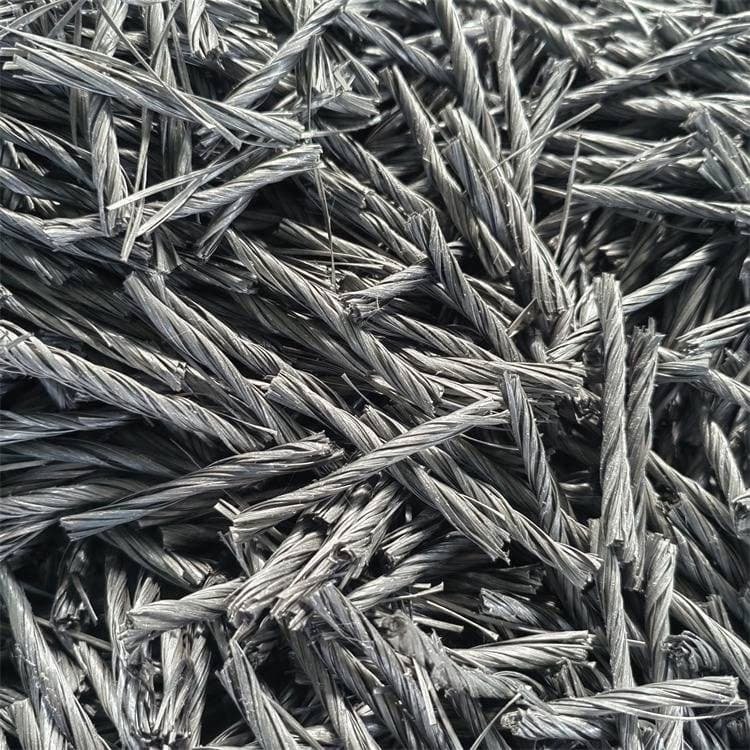
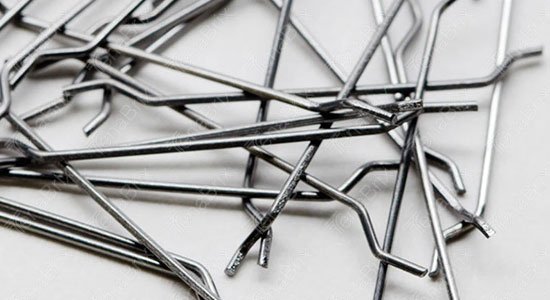
What are the core differences between twisted fiber and steel fiber? Below, we will compare them based on several key engineering considerations.
1. Crack Control: Which One Performs Better?
Cracking is one of the biggest challenges in concrete floors.
Macrofiber performs especially well in controlling early-stage cracks, such as plastic shrinkage cracks. Because thousands of fibers are distributed evenly throughout the mix, they help stop tiny cracks from growing.
Steel fiber is better at controlling larger cracks after they form. It acts like a bridge across cracks, preventing them from widening under load.
In short, macrofiber prevents small cracks early, while steel fiber handles big cracks better.
2. Strength and Load Capacity
When it comes to load-bearing capacity, steel fiber is hard to beat.
Steel has a very high elastic modulus, which means it can resist deformation under heavy loads. This makes it ideal for heavy-duty industrial floors, such as logistics hubs or container yards.
Macrofiber has a much lower modulus. However, it compensates with quantity and distribution. While it may not match steel in peak strength, it can still meet medium-load requirements effectively.
So, for heavy-duty environments, steel fiber is generally more reliable. For moderate loads, macrofiber is often sufficient.
3. Impact and Fatigue Resistance
Industrial floors are not just static—they experience repeated loads, impacts, and vibrations.
Macrofiber has excellent energy absorption capacity. It bends rather than breaks, which makes it highly resistant to fatigue over time.
Steel fiber is strong, but under repeated loading cycles, it may gradually weaken or even fracture.
Therefore, for environments with frequent movement or dynamic loads, macrofiber often performs better in the long run.
4. Corrosion Resistance:
Macrofibers do not rust, making them highly advantageous in humid environments, chemical plants, salt spray environments, or scenarios with high durability requirements.
Steel fiber, however, can corrode—especially if exposed at the surface. This may lead to rust stains and affect the appearance of the floor over time.
For environments with corrosion risks, macrofiers are safer and more reliable.
5. Workability and Construction Efficiency
From a construction perspective, macrofiber is much easier to handle.
It disperses evenly in the mix, does not clump, and works well with pumping systems. It also helps achieve a smoother surface finish, which is important for polished floors.
Steel fiber can sometimes form clumps (balling), making mixing and placement more difficult. It may also protrude from the surface, affecting finishing processes like laser leveling or polishing.
In terms of construction convenience, macrofibers clearly have the advantage.
6. Safety on Site and in Use
Safety is often overlooked but extremely important.
Macrofiber has no sharp edges, making it safe for workers during installation and for equipment during operation.
Steel fiber, with its rigid and sharp ends, can pose risks. It may cause injuries during handling and even damage forklift tires if exposed on the surface.
7. Cost Comparison: Not as Simple as It Looks
Many people ask directly: Which option saves more money? This question cannot be answered by looking at the unit price of the material alone; one must also consider dosage, transportation, construction efficiency, and final design requirements.
Steel fiber usually requires a higher dosage (around 20–40 kg per cubic meter), while macrofiber is used in much smaller amounts (typically 3–8 kg per cubic meter). This reduces not only material costs but also transportation and labor costs.
However, in high-load designs, macrofiber may need to be used in higher quantities or combined with traditional reinforcement. In such cases, the total cost may become comparable.
So, the most cost-effective option depends on the specific project requirements.
| Aspect | Twisted Macrofiber | Fibre d'acier |
|---|---|---|
| Contrôle des fissures | Excellent for early-stage and small cracks (plastic shrinkage) | Better for controlling large cracks after they form |
| Strength & Load Capacity | Suitable for light to medium loads; relies on distribution | High strength and stiffness; ideal for heavy-duty floors |
| Impact & Fatigue Resistance | High flexibility and energy absorption; excellent fatigue resistance | Strong but may weaken or fracture under repeated loads |
| Résistance à la corrosion | Does not rust; ideal for humid and chemical environments | Prone to corrosion; may cause rust stains over time |
| Workability | Easy to disperse; no clumping; smooth finishing | May clump (balling); can affect mixing and finishing |
| Safety | No sharp edges; safe for workers and equipment | Sharp ends may cause injury or damage equipment |
| Coût | Lower dosage (3–8 kg/m³); cost-effective in many cases | Higher dosage (20–40 kg/m³); higher material and handling cost |
What Are The Best Applications for Twisted Macrofiber and Steel Fiber?
Best Applications for Twisted Macrofiber
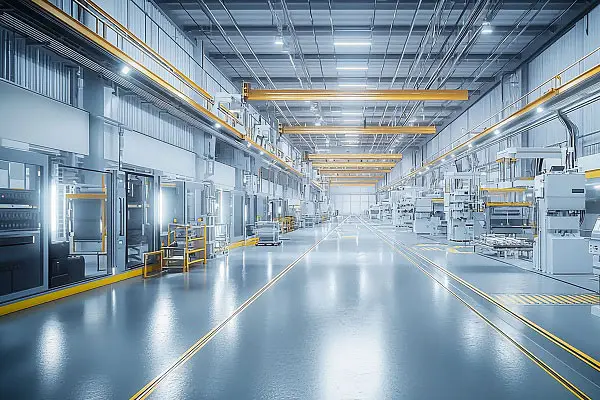
Twisted macrofiber is ideal for industrial floors where crack control, durability, and construction efficiency are the main priorities.
It is commonly used in:
- Light to medium-duty industrial floors
- Warehouses and e-commerce logistics centers
- Parking structures
- Chemical plant flooring
- Humid or corrosion-prone environments
- Polished concrete floors with high aesthetic requirements
In these scenarios, the focus is typically on reducing cracks, improving long-term durability, ensuring smooth construction, and optimizing overall cost, rather than achieving maximum load-bearing capacity.
Best Applications for Steel Fiber
Steel fiber is better suited for projects that require high strength and structural performance.
Typical applications include:
- Heavy-duty industrial floors
- Ports and container yards
- Areas with frequent heavy forklift traffic
- Floors with high load and stiffness requirements
- Large-area jointless floors
In these environments, structural demands are much higher, and the strength and rigidity of steel fiber make it a more reliable choice.
Industry Trend: Will Steel Fibers Be Replaced By Macrofibers?
In recent years, there has been a clear trend in the industry:
Steel fiber is increasingly being partially replaced by macrofiber.
This shift is driven by several factors:
Improved construction efficiency, higher safety standards, better durability in aggressive environments, and lower maintenance costs.
That said, steel fiber still plays an essential role in extreme heavy-load applications, where its strength cannot yet be fully replaced.
Which One Should You Choose for Industrial Floors?
There is no simple “better or worse” when comparing twisted macrofiber and steel fiber—the right choice depends on your specific project needs.
If your project focuses on controlling early cracks, improving construction efficiency, preventing corrosion, achieving a better surface finish, and optimizing overall cost, then twisted macrofiber is usually the better option.
On the other hand, if your project involves heavy loads, frequent heavy forklift traffic, high stiffness requirements, large jointless floors, or extreme service conditions, then steel fiber remains the more reliable solution.
In practice, the best decision comes from evaluating the full picture—load requirements, environment, construction method, budget, and long-term durability—rather than relying on a single factor.
Réflexions finales
There is no one-size-fits-all solution when it comes to industrial floor reinforcement. The best choice depends on load requirements, environmental conditions, construction methods, and budget.
Macrofiber offers flexibility, durability, and ease of use, making it ideal for many modern projects. Steel fiber, meanwhile, remains the go-to option for the most demanding structural applications.
Understanding their differences allows you to design smarter, build faster, and achieve better long-term performance.
