








Concrete Fiber Reinforcement Dosage Guide: How Much Fiber Do You Need?

What Is Basalt Fiber
What Is Basalt Fiber? A Complete Guide to Properties, Applications, and Advantages
BLOGS
Concrete Fiber Reinforcement Dosage Guide: How Much Fiber Do You Need?
Getting the fiber dosage right is one of the most critical decisions in any concrete mix design. Too little fiber and you won’t achieve the crack control or structural performance you need. Too much and you risk workability problems, surface finish issues, and unnecessary cost.
This guide gives you concrete (pun intended) dosage rates for every major fiber type and application — backed by field experience across thousands of projects globally.
Quick Reference: If you’re in a hurry, jump to the Dosage Reference Table by Application below.
Fiber dosage is typically expressed in kilograms per cubic meter of concrete (kg/m³), or occasionally as a volume fraction (Vf %).
The dosage you select directly affects:
Most engineers and contractors err on the side of under-dosing because fiber looks expensive on a per-bag basis. The reality is that the cost of a cracked slab — re-grinding, epoxy injection, or full replacement — is orders of magnitude higher.
Before diving into the numbers, a quick glossary:
| Term | Definition |
|---|---|
| Dosage Rate | Amount of fiber added per cubic meter of concrete (kg/m³) |
| Volume Fraction (Vf%) | Fiber volume as a percentage of total concrete volume (1 kg/m³ ≈ 0.067% Vf for PP fiber) |
| Minimum Effective Dosage | Lowest dosage that delivers measurable performance improvement |
| Structural Dosage | Dosage at which fiber can replace or reduce traditional reinforcement |
| Hybrid System | Combination of micro fiber (crack control) + macro fiber (structural) in the same mix |
Different fiber types operate at fundamentally different dosage levels due to differences in density, modulus, and reinforcement mechanism.
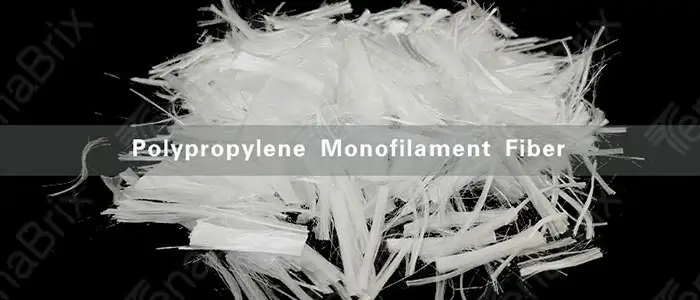
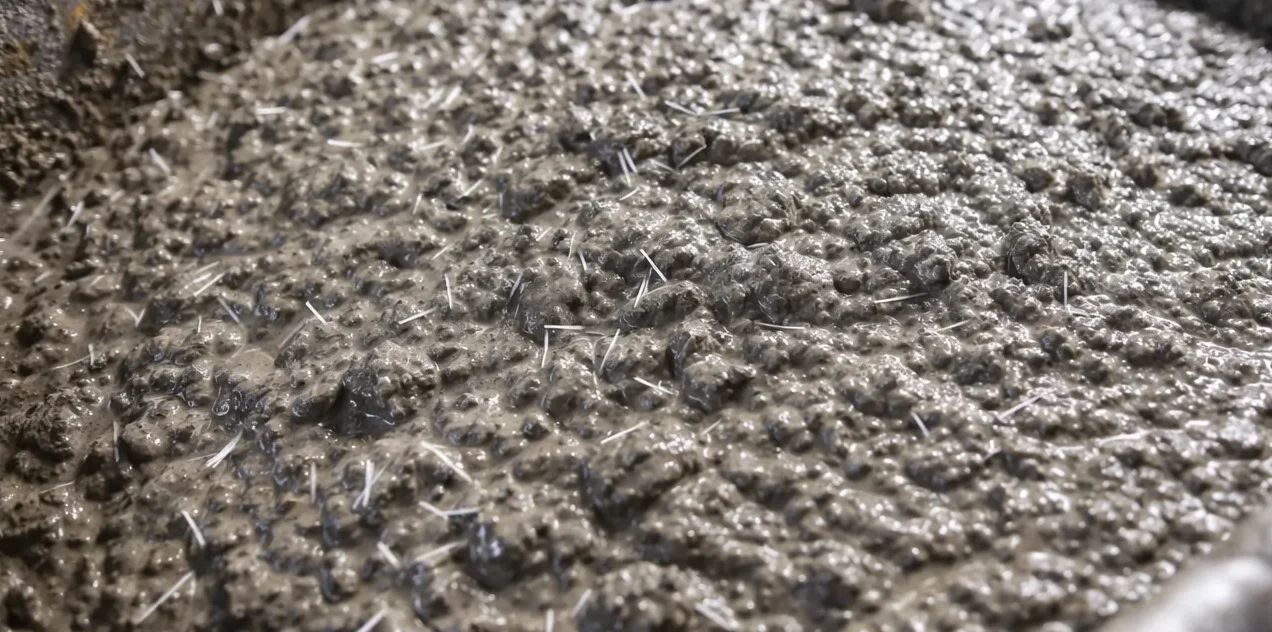
Micro fibers are fine, short (6–19 mm) monofilament or fibrillated fibers that primarily control plastic shrinkage and early-age cracking.
TenaBrix Product: Polypropylene Micro Fiber — available in 6mm, 12mm, and 19mm lengths
Macro fibers are larger, embossed or profiled fibers (30–60 mm length) that provide post-crack structural reinforcement. At sufficient dosage, they can partially or fully replace steel mesh or steel fibers.
TenaBrix Product: Polypropylene Macro Fiber — 48mm, 54mm embossed fibers; EFNARC compliant
Steel fibers offer the highest post-crack strength and are used in the most demanding structural applications.
Note: Steel fiber has much higher density than synthetic fiber (~7.85 g/cm³ vs ~0.91 g/cm³), which is why kg/m³ dosages appear much higher even at similar volume fractions.
PAN fiber is a specialty high-performance fiber used where chemical resistance, fire resistance, or high-temperature stability is required.
TenaBrix Product: PAN Fiber — tested to EN 14889-2 and ACI 544
Similar dosage range to polypropylene micro fiber, used where higher alkali resistance or specific elongation properties are needed.
TenaBrix Product: ポリエステル繊維

This is the quick-reference table most engineers and contractors bookmark. All values represent typical field dosages — always confirm with mix design testing for critical applications.
| Application | Recommended Fiber | Fiber Dosage (kg/m³) | Primary Benefit |
|---|---|---|---|
| Residential slab on grade | PP Micro | 0.6 – 0.9 | Plastic shrinkage control |
| Commercial floor (light traffic) | PP Micro | 0.9 – 1.2 | Crack control |
| Warehouse floor (heavy traffic) | PP Macro | 4 – 6 | Replace mesh, reduce joints |
| Industrial floor (forklift/rack) | PP Macro | 5 – 7 | Structural reinforcement |
| Cold storage floor | PP Macro | 5 – 7 + PP Micro 0.9 | Thermal cycling resistance |
| Chemical plant floor | PP Macro + PAN | 5 PP + 1.5 PAN | Corrosion resistance |
| Precast elements (general) | PP Micro | 0.9 – 1.5 | Early demold, crack control |
| Precast thin elements | Steel Fiber | 30 – 50 | Structural integrity |
| Tunnel shotcrete (primary) | Steel Fiber | 30 – 40 | Load-bearing capacity |
| Tunnel shotcrete (final lining) | PP Macro | 5 – 8 | Corrosion resistance, lightness |
| Bridge deck overlay | PAN Fiber | 1.5 – 2.5 | Chemical resistance, bonding |
| Airport runway / apron | PAN Fiber + PP Macro | 1.5 PAN + 5 PP | Fire + impact resistance |
| Marine structures | PAN Fiber | 1.8 – 3.0 | Chloride resistance |
| Sprayed render / stucco | PP Micro (6mm) | 0.6 – 0.9 | Crack control, adhesion |
| Refractory / heat-resistant | PAN Fiber | 2.0 – 3.0 | Spalling prevention to 600°C |
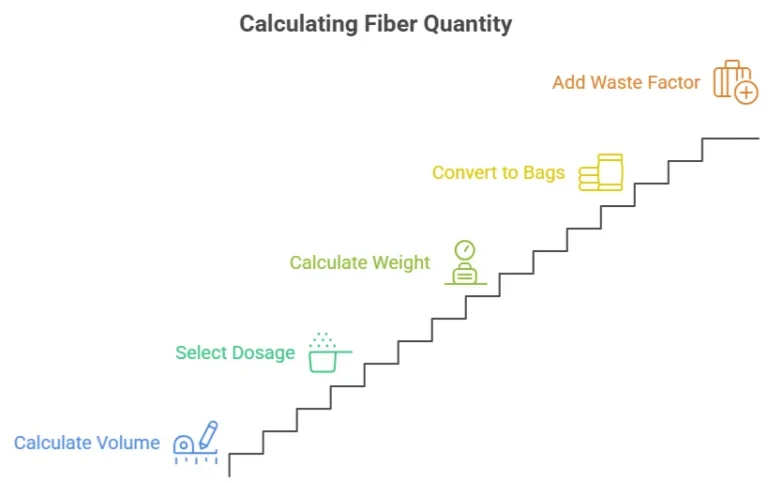
Volume (m³) = Length (m) × Width (m) × Thickness (m)
Example: A 50m × 30m warehouse floor at 200mm thickness:
Volume = 50 × 30 × 0.20 = 300 m³
For a warehouse floor replacing traditional steel mesh:
→ Use PP Macro Fiber at 5 kg/m³
Fiber Required (kg) = Volume (m³) × Dosage (kg/m³)
300 m³ × 5 kg/m³ = 1,500 kg of Macro Fiber
TenaBrix macro fiber is supplied in 20kg bags:
1,500 kg ÷ 20 kg/bag = 75 bags
75 bags × 1.05 = 79 bags (round up to 80)
| Slab Area | Thickness | Concrete Volume | Macro Fiber @ 5 kg/m³ | Micro Fiber @ 0.9 kg/m³ |
|---|---|---|---|---|
| 100 m² | 150mm | 15 m³ | 75 kg (4 bags) | 13.5 kg (1 bag) |
| 500 m² | 150mm | 75 m³ | 375 kg (19 bags) | 68 kg (4 bags) |
| 1,000 m² | 200mm | 200 m³ | 1,000 kg (50 bags) | 180 kg (9 bags) |
| 5,000 m² | 200mm | 1,000 m³ | 5,000 kg (250 bags) | 900 kg (45 bags) |
| 10,000 m² | 250mm | 2,500 m³ | 12,500 kg (625 bags) | 2,250 kg (113 bags) |
One of the most effective approaches for industrial and infrastructure projects is a dual-fiber hybrid system: micro fiber for early-age and plastic shrinkage crack control, combined with macro fiber (or steel fiber) for post-crack structural performance.
| Application | Micro Fiber | Macro Fiber | Notes |
|---|---|---|---|
| Industrial flooring | PP Micro 0.9 kg/m³ | PP Macro 5–7 kg/m³ | Best practice for jointless slabs |
| Cold storage | PP Micro 0.9 kg/m³ | PP Macro 6 kg/m³ | Thermal movement control |
| Chemical plant | PAN 0.9 kg/m³ | PP Macro 5 kg/m³ | PAN = chemical resistance layer |
| Infrastructure | PAN 1.0 kg/m³ | Steel 30 kg/m³ | PAN for fire safety, steel for load |
For complete product comparisons and application guidance, see our Complete Guide to Choosing Concrete Fiber Reinforcement.
Larger maximum aggregate size (>20mm) can affect fiber distribution. For concrete with 32mm+ aggregate, slightly increasing dosage by 10-15% helps maintain uniform fiber dispersion.
Lower w/c ratios (≤0.40) produce stiffer mixes where fiber distribution can be uneven. Consider:
Pumped concrete mixes with macro fiber require careful attention:
Micro fiber at 0.9 kg/m³ does NOT provide structural reinforcement — that requires macro fiber at 4+ kg/m³. The two fiber types serve completely different purposes.
5 kg/m³ of synthetic macro fiber ≈ 0.55% volume fraction. 5 kg/m³ of steel fiber ≈ 0.064% volume fraction — a massive difference in actual fiber content.
Very fine aggregate with high surface area can “consume” fibers. Always run a trial batch before full-scale production.
Fiber should be added to the mixer after aggregate and water are combined, not to a dry mix. Pre-clumping in dry conditions reduces distribution quality.
Above ~10 kg/m³ for synthetic macro fiber, workability loss typically outweighs additional performance gains. Design the mix system rather than simply adding more fiber.
A: For micro PP fiber (crack control), the standard dosage is 0.6–0.9 kg/m³. For structural PP macro fiber, dosage ranges from 3–10 kg/m³ depending on the required performance level. Industrial floors typically use 5–7 kg/m³.
A: Yes — macro synthetic fiber at 5–7 kg/m³ can replace conventional welded wire mesh in many slab-on-grade applications. This is standard practice in warehouse and industrial floor construction. However, fiber cannot replace structural rebar in beams, columns, or suspended slabs without a full structural engineering review.
A: For synthetic macro fiber, the practical upper limit is around 8–10 kg/m³ without significant plasticizer adjustment. Above this, slump loss becomes difficult to manage without changing mix design fundamentals.
A: Add fiber to the mixer after the aggregate and approximately 80% of the water have been combined. Mix for a minimum of 90 seconds after fiber addition. Avoid adding fiber to dry aggregate. For fibrillated fiber, ensure the batch plant screw conveyor is set to the correct feed rate.
A: No. Higher-strength concrete mixes (C40+) may allow slightly lower macro fiber dosages to achieve the same performance, as the concrete matrix itself is stronger. For standard C25–C30 mixes, always use the full recommended dosage.
A: Use the same kg/m³ dosage calculation as cast-in-place concrete. Account for rebound (typically 10–20% for steel fiber in dry-mix shotcrete) by increasing your order quantity accordingly. For wet-mix shotcrete, rebound is lower.
A: Underdosing is the #1 cause of field fiber reinforcement complaints. At insufficient dosage levels, crack control will be ineffective and you’ll see the same cracking pattern as unreinforced concrete. There is a threshold effect — going from 0 to 0.3 kg/m³ gives minimal benefit; the full 0.6–0.9 kg/m³ range is required for measurable plastic shrinkage control.
Every project is different. Slab thickness, load conditions, sub-base quality, and exposure class all affect the optimal fiber dosage.
Our technical team has specified fiber systems for over 500+ projects across 30 countries — from small commercial slabs to major infrastructure contracts.
Request a Free Technical Consultation
Include your project details — application type, slab dimensions, design load — and we’ll provide specific dosage recommendations and a preliminary cost comparison within 24 hours.