










TenaBrix® fibers for shotcrete that comply with ASTM C1116, Standard Specification for Fiber-Reinforced Shotcrete, and are specifically used to control and mitigate plastic shrinkage cracking, increase surface durability, impact, and abrasion resistance.
CHALLENGES
The Challenges of Traditional Shotcrete Applications
Shotcrete is widely used in underground and slope projects, but traditional methods often face several challenges that can affect long-term performance and durability.

Plastic Shrinkage Cracking
Fresh shotcrete is vulnerable to early-age cracking caused by rapid moisture loss and temperature changes.

Reduced Structural Integrity
Traditional reinforcement methods may not provide uniform crack control throughout the sprayed concrete layer.

Difficult Construction Conditions
Underground and slope projects require materials that maintain performance under complex environments.
RECOMMENDED FIBER SOLUTION
Polypropylene Synthetic Macrofiber
TenaBrix PP synthetic fiber is specially designed for shotcrete applications, providing reliable crack control and enhanced durability.

OUR SOLUTION
Polypropylene Fiber Reinforced Shotcrete Solution
Polypropylene fiber creates a three-dimensional reinforcement network inside shotcrete.
It helps control early cracking, improves toughness, and enhances long-term durability in demanding construction environments.
HOW IT WORKS
Distributed Reinforcement Inside Shotcrete
TenaBrix PP fibers disperse randomly in shotcrete to form a 3D network. They bridge microcracks and relieve shrinkage stress at early age to stop plastic shrinkage cracking. When heated, the PP fibers melt and create connected voids for steam escape, preventing explosive spalling. They also absorb impact energy and improve toughness, but are not intended for structural load bearing.

PP fibers are added to the concrete and mixed thoroughly prior to spraying to ensure uniform distribution throughout the shotcrete.
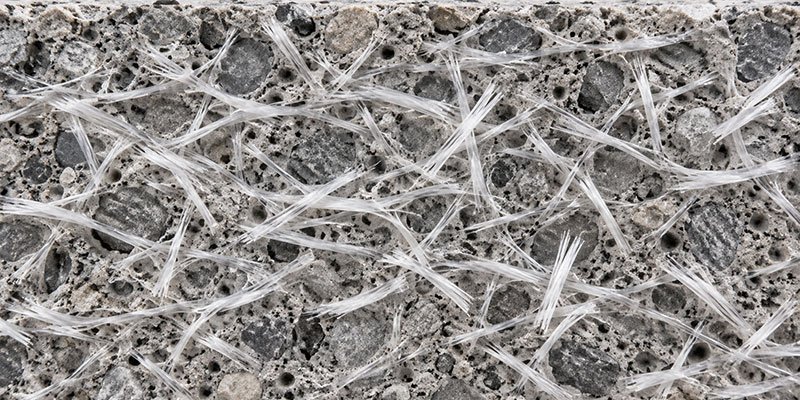
Fibers disperse uniformly inside the concrete, forming a 3D reinforcement network that enhances toughness and crack resistance.
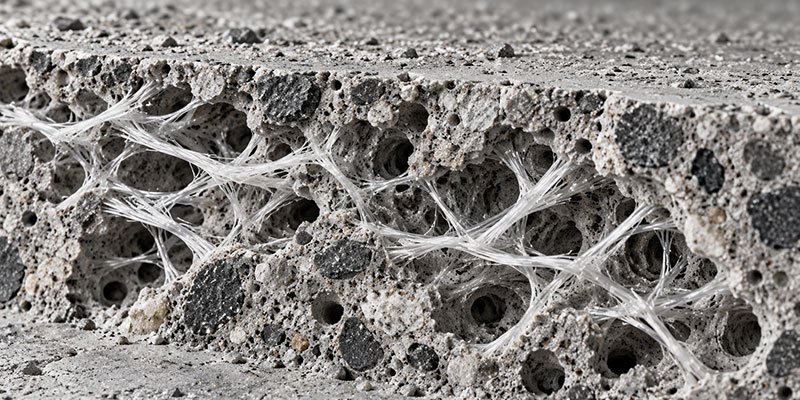
Fiber networks can effectively bridge micro-cracks, reduce cracking, and enhance the long-term structural integrity of concrete.



KEY CONSIDERATIONS
For Successful Implementation
FREQUENTLY ASKED QUESTIONS
PP Fiber for Shotcrete FAQ
It controls plastic shrinkage cracks, improves impact & abrasion resistance, and prevents explosive spalling under fire for tunnel and slope shotcrete.
Normal range is 1.0–2.0 kg/m³. For common support: 0.9–1.2 kg/m³; fire-resistant shotcrete can go up to 2.0–2.5 kg/m³. Trial mixing is required before formal use.
12 mm and 19 mm micro PP fibers are most widely used. 12 mm disperses better and cuts rebound; 19 mm provides higher toughness for tunnel lining and slope stabilization.
No. It can partially replace secondary steel mesh for crack control. For structural load-bearing purposes, engineers’ design specification must be followed.
Within the recommended dosage, PP fiber has almost no negative impact on compressive strength. Excessive addition (>2.0 kg/m³) will worsen workability and may cause fiber balling.