





Concrete has always been the unshakable “backbone” of modern construction. However, as everyone knows, it has a troublesome flaw: it is too brittle and prone to cracking. Once cracks form, durability decreases, maintenance costs rise, and the structural safety also becomes a cause for concern.
To address this issue, Engineered Cementitious Composite (ECC) has become the “new darling” of the construction industry. Many people vividly refer to it as “flexible concrete” because its design breaks free from traditional constraints—it offers controllable flexibility and exceptional crack resistance.
In this guide, we will explore what ECC is, how it works, the role of different fibers, and where it is used in real-world projects.
What Is Engineered Cementitious Composite (ECC)?
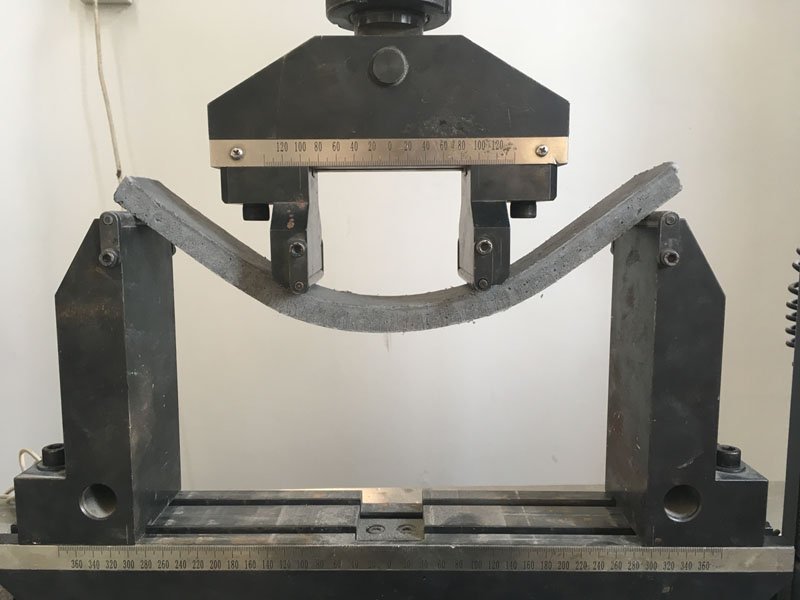
Engineered Cementitious Composites (ECC), popularly known as “bendable concrete,” represent a specialized class of high-performance fiber-reinforced cementitious composites. Unlike traditional concrete, which is notoriously brittle and prone to catastrophic cracking under tension, ECC is designed using micromechanical principles to exhibit extreme ductility.
While standard concrete typically has a tensile strain capacity of about 0.01%, ECC can reach strain capacities between 3% and 7%. This means it can deform significantly—essentially acting more like a ductile metal than a ceramic—before failing.
Components of ECC
The unique behavior of ECC is not the result of a single “magic ingredient” but rather a precise balance of its components:
- Cement
- Fine aggregates (such as silica sand)
- Mineral admixtures (like fly ash)
- Water
- Chemical additives
- Fibers (the most critical component)
One notable difference from traditional concrete is that ECC does not use coarse aggregates. This improves uniformity and allows fibers to distribute more evenly throughout the material.
How Engineered Cementitious Composite (ECC) Works
Actually, the secret behind why ECC is so “miraculous” lies entirely in its strain-hardening behavior.
To put it simply, once ordinary concrete cracks, its load-bearing capacity immediately “slumps”; ECC, however, is different—it can actually continue to carry increasing tensile stress even after the first crack appears.
This ability to “crack without failing” is primarily achieved through these few mechanisms:
- Microcracks begin to form instead of large cracks
- Fibers bridge these cracks and prevent them from widening
- New cracks form instead of existing ones growing
- The material continues to deform while maintaining strength
The result is that while ECC develops many cracks, each one is typically thinner than a human hair (less than 100 micrometers).
Because these cracks are so incredibly small, they not only fail to compromise the durability of the building but can even self-heal under certain conditions, mending themselves like a skin wound.
Key Properties of Engineered Cementitious Composite (ECC)
ECC offers a range of performance advantages that make it stand out from traditional concrete.
- Exceptional Ductility: Its primary claim to fame is a tensile strain capacity that is 300 to 500 times greater than traditional concrete.
- High Energy Absorption: Because it can deform so much before failing, ECC is incredible at absorbing energy from impacts or seismic vibrations
- Micro Crack Width Control: Cracks typically remain extremely small, which helps prevent water and harmful substances from entering the structure.
- Self-healing Capability: When moisture and air enter a micro-crack, the unreacted cement and fly ash react to form new minerals that seal the crack shut, restoring the material’s integrity over time
ECC also demonstrates excellent durability, including resistance to:
- Freeze-thaw cycles
- Chemical attack
- Corrosion
Finally, its improved tensile performance makes it suitable for applications where conventional concrete would fail under tension.
The Effect of Different Fibers on ECC Performance
In real projects, the performance of ECC largely depends on the type of fiber used. Different fibers bring different strengths, so the choice usually comes down to your project needs and budget.
1. Polypropylene Fiber (PP Fiber)
Polypropylene fiber is a very common option in construction. Its advantages are primarily reflected in:
- Low density and easy dispersion
- Good corrosion resistance
- Low cost, suitable for large-scale applications
In ECC, polypropylene fibers can effectively improve the material’s crack resistance, performing particularly well during the early shrinkage stage.
However, it should be noted that if the dosage is too high, the fibers tend to clump, which can actually impair strength and workability. Therefore, in practical applications, the dosage must be carefully controlled.
Suitable Applications: Cost-sensitive projects such as flooring, roads, and general structural reinforcement.
2. Carbon Fiber
Carbon fiber is on the premium end. It offers excellent strength and stiffness, and can noticeably improve both compressive and flexural performance in ECC.
It also has a unique advantage—electrical conductivity—which makes it useful for smart structures and monitoring systems.
The downside is cost and the need for careful mixing. So, it’s usually used in high-end applications like bridge reinforcement or advanced infrastructure.
3. Basalt Fiber: Strong and Sustainable
Basalt fiber is a new type of inorganic fiber derived from natural ore, often referred to as a “green material”. Its advantages are comprehensive:
- High strength, high-temperature resistance
- Strong corrosion resistance
- Environmentally friendly and biodegradable
In ECC, basalt fiber significantly enhances the material’s tensile properties and forms a more uniform and dense crack structure.
Although its ductility is slightly lower than that of traditional ECC, it still exhibits good toughness.
Suitable Applications: Corrosive environments, high-temperature environments, green building projects.
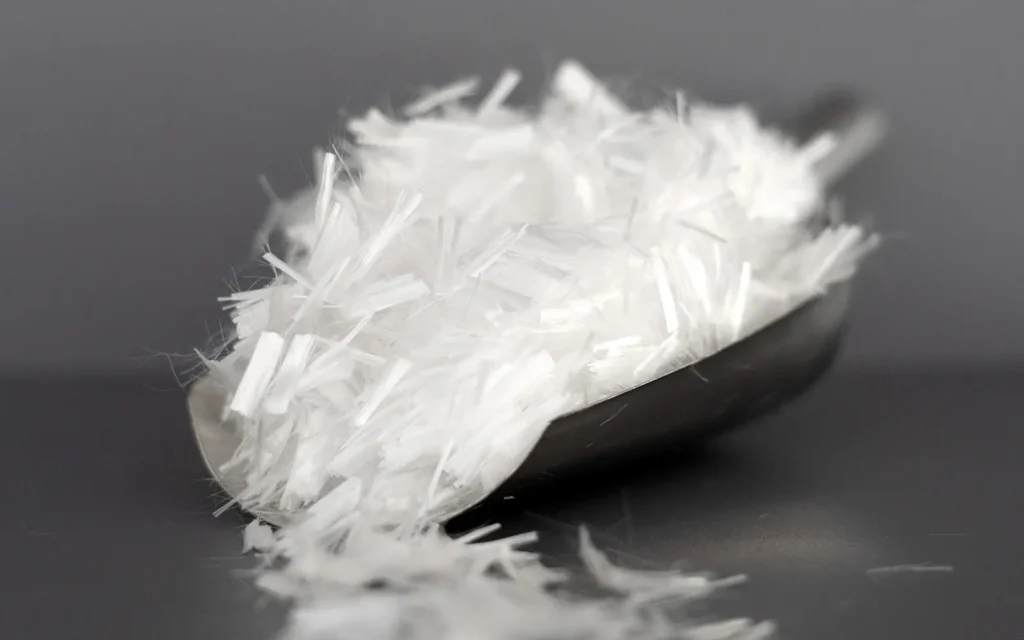
4. Glass Fiber: Balanced Performance
Glass fiber is a well-established material that offers a good balance between cost and performance.
It improves strength and disperses relatively well in ECC mixes, making it suitable for general construction use.
However, in more demanding conditions—like freeze-thaw environments—it may not perform as well as higher-end fibers.
In short, there’s no “one-size-fits-all” fiber for ECC. The best choice depends on what matters most for your project—cost, strength, durability, or long-term performance.
Applications of Engineered Cementitious Composite
Thanks to its unique properties, ECC is increasingly used in a wide range of construction applications.
Common Applications
ECC is particularly suitable for structures that require durability and crack control, such as:
- Bridges and Decks: ECC is used in bridge link slabs, replacing mechanical joints. This allows the bridge deck to expand and contract naturally without the need for high-maintenance metal joints.
- Seismic Retrofitting: Its energy-absorbing properties make it perfect for reinforcing columns and beams in earthquake-prone zones.
- Water Infrastructure: Due to its anti-seepage and self-healing properties, it is ideal for dams, tunnels, and water tanks where leaks are a major concern.
- Pavements and road repairs
- Industrial flooring
- Protective and overlay materials
In these applications, ECC helps reduce maintenance costs and extend service life.
Real-World Cases of ECC Applications
- In Tokyo, the Glorio Roppongi high-rise building uses ECC in its coupling beams—these are key structural parts that help the building handle earthquakes. Because ECC can deform and absorb energy instead of cracking suddenly, it significantly improves the building’s seismic performance. Similar designs have also been used in other high-rise projects in Japan.
- Michigan Bridge Decks: In the United States, the Grove Street Bridge in Michigan utilized an ECC link slab. By replacing traditional joints with this flexible material, the bridge requires significantly less maintenance and has a much longer service life.
- Tunnel Linings: ECC has been used as a thin-shell lining in various tunnels to prevent cracks caused by ground movement, effectively sealing out groundwater for decades.

Glorio Roppongi High-rise Building

Michigan Bridge Decks
Final Thoughts
Engineered Cementitious Composites (ECC) represent the peak of modern material science in construction. Traditional concrete has a rigid and brittle nature. ECC gives up this nature. Instead, it adopts a ductile and resilient behavior.
Through this shift, we are moving toward a future of “zero-maintenance” infrastructure. Whether it helps buildings resist earthquakes or allows bridges to last for a century, ECC can handle these tasks. It is truly a concrete that can take the pressure.