



Concrete is strong under compression, but without reinforcement, it can be brittle and prone to cracking. Adding fibers to concrete is a proven and effective technique to enhance its toughness, durability, and crack resistance. Different materials offer unique properties suited for various engineering challenges.
This guide explores the nine most common types of concrete fibers, breaking down their advantages and ideal applications for construction professionals.
9 Common Concrete Fibers to Reinforce Concrete
1. Steel Fiber
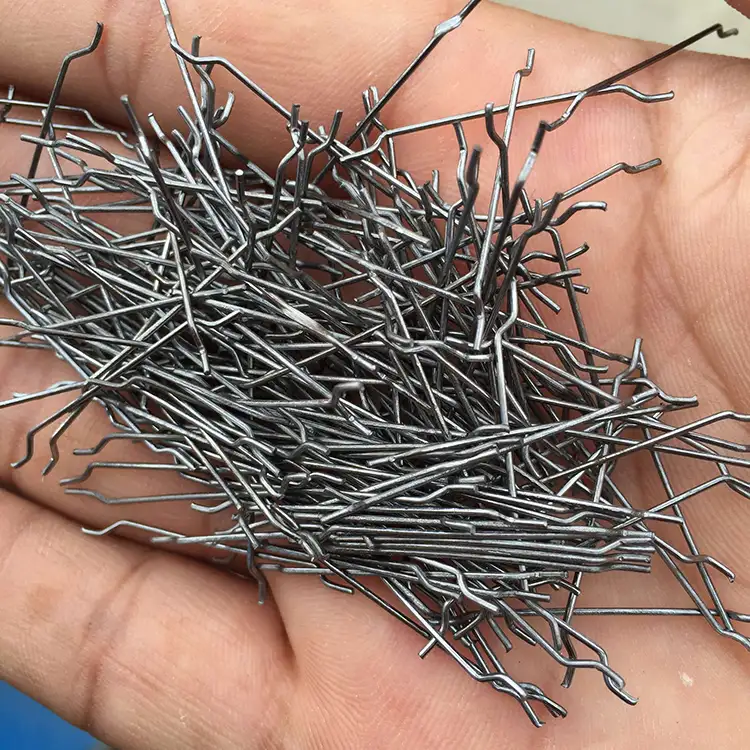
Steel fiber is one of the earliest and most commonly used fibers in concrete reinforcement. It is usually made from low-carbon steel wire, steel sheets, or molten steel. Common shapes include straight, crimped, and hooked-end fibers, which help improve bonding with concrete.
Key Advantages
- High strength improvement: Significantly increases flexural and tensile strength, allowing concrete to exhibit more plastic behavior before failure instead of sudden brittle fracture.
- Excellent impact and fatigue resistance: Absorbs much more energy than plain concrete, making it ideal for dynamic and heavy loads.
- Effective crack control: Effectively restrains plastic and drying shrinkage, preventing crack formation and propagation.
- Good compatibility with concrete: Similar elastic modulus allows early load sharing
Typical Applications
- Industrial floors and heavy-duty warehouses
- Tunnel linings and shotcrete in mining
- Bridge decks and airport pavements
- Hydraulic structures such as spillways and dams
Steel fiber reinforced concrete is ideal for projects requiring high load capacity and impact resistance.
2. Polypropylene (PP) Fiber
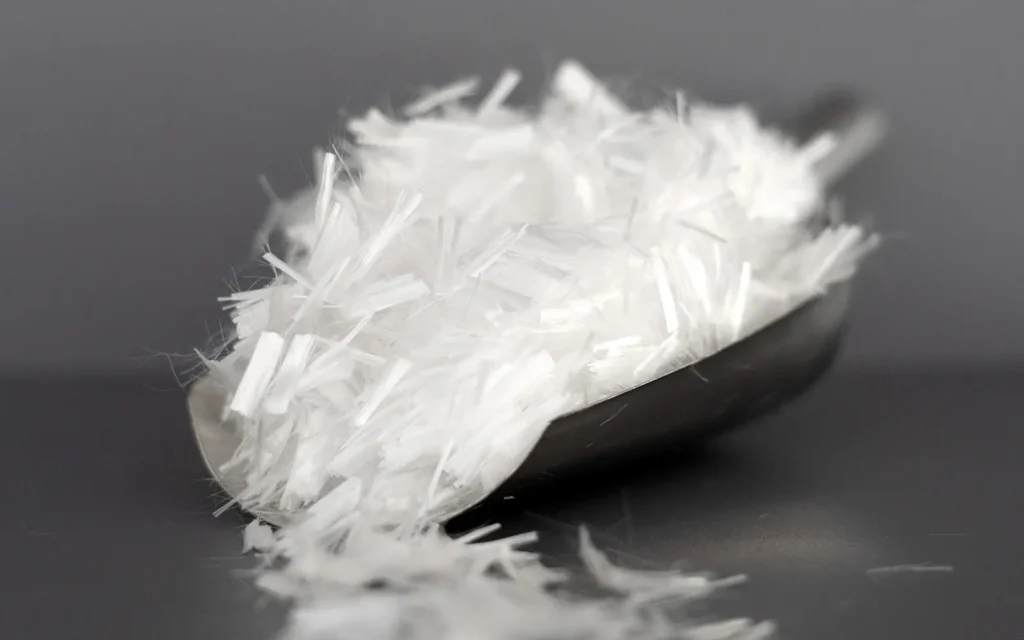
Polypropylene fiber is one of the most popular synthetic microfibers. It has a very small diameter(diameter < 0.1mm) and disperses evenly throughout concrete, making it highly effective for early-age crack control.
Key Advantages
- Excellent plastic shrinkage crack control: Its primary strength is preventing early-stage cracks caused by water loss before the concrete hardens.
- Improves impermeability and freeze-thaw resistance: The dense network of microfibers blocks capillary channels, reducing water permeability and enhancing durability in cold climates.
- Highly resistant to chemicals: Will not rust or corrode
- Easy to use: Lightweight, does not ball up, and can be added directly to the mixer without changing standard procedures.
Typical Applications
- Large-area floors and slabs
- Shotcrete (often combined with steel fiber)
- Precast products such as pipes and covers
- Water channels and lining structures
PP fiber is a cost-effective choice for general crack prevention.
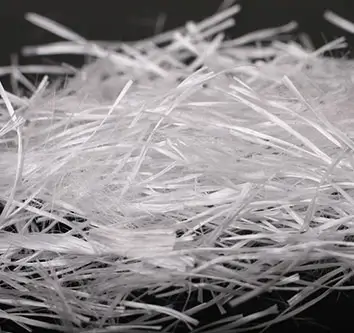
3. Glass Fiber (AR Glass Fiber)
Glass fiber used in concrete must be alkali-resistant (AR) glass fiber, which contains zirconium dioxide (ZrO₂) to resist corrosion from cement’s alkaline environment.
Key Advantages
- Lightweight but strong: Offers tensile strength close to steel but at about one-quarter of the density.
- Non-conductive and non-thermal: Excellent electrical and thermal insulation
- Flexible form options: Available as chopped strands, meshes, or fabrics
- Good chemical resistance: Stable against most acids, salts, and solvents (except strong alkalis).
Typical Applications
- GRC (Glass Fiber Reinforced Concrete) panels and facades
- Decorative architectural elements
- Thin-wall shotcrete and small water channels
- Secondary tunnel linings
Glass fiber is widely used in architectural and decorative concrete.
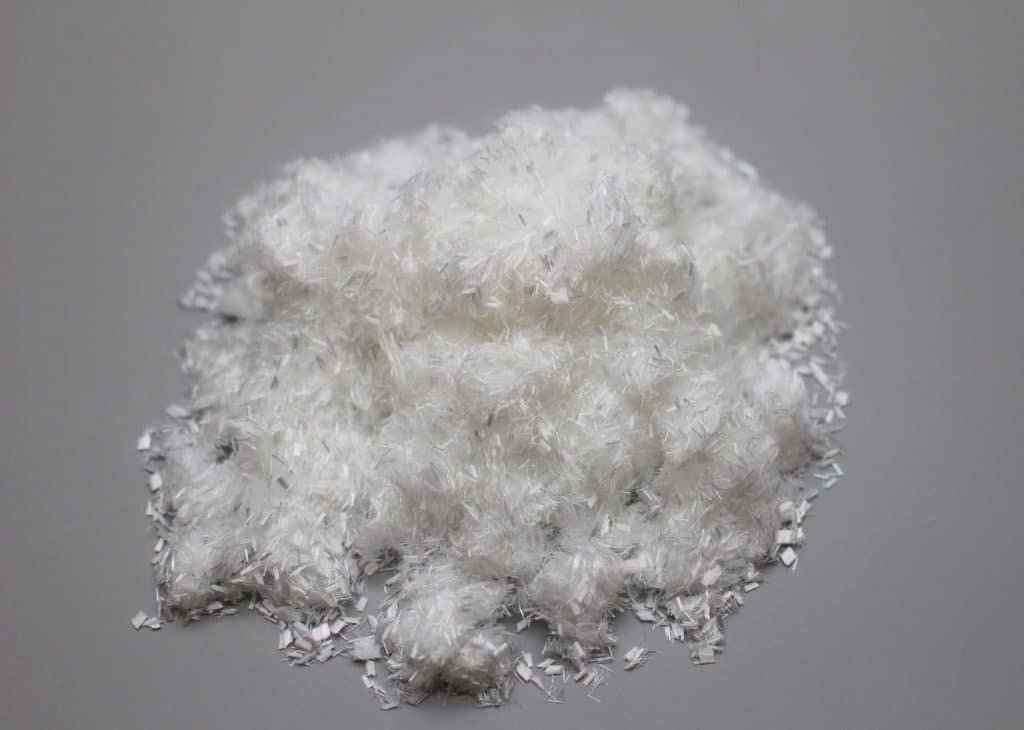
4. Polyester Fiber
Polyester fiber is a high-strength synthetic fiber known for its durability and resistance to weathering. It is used in both cement concrete and asphalt concrete.
Key Advantages
- Improves crack and impact resistance
- Good abrasion resistance
- Strong UV and aging resistance
- Good bonding with cement matrix
Typical Applications
- Airport runways and highway pavements
- Bridge deck waterproof layers
- Precast slabs and paving blocks
- Repair and strengthening mortars
Polyester fiber concrete is suitable for surfaces exposed to traffic and wear.
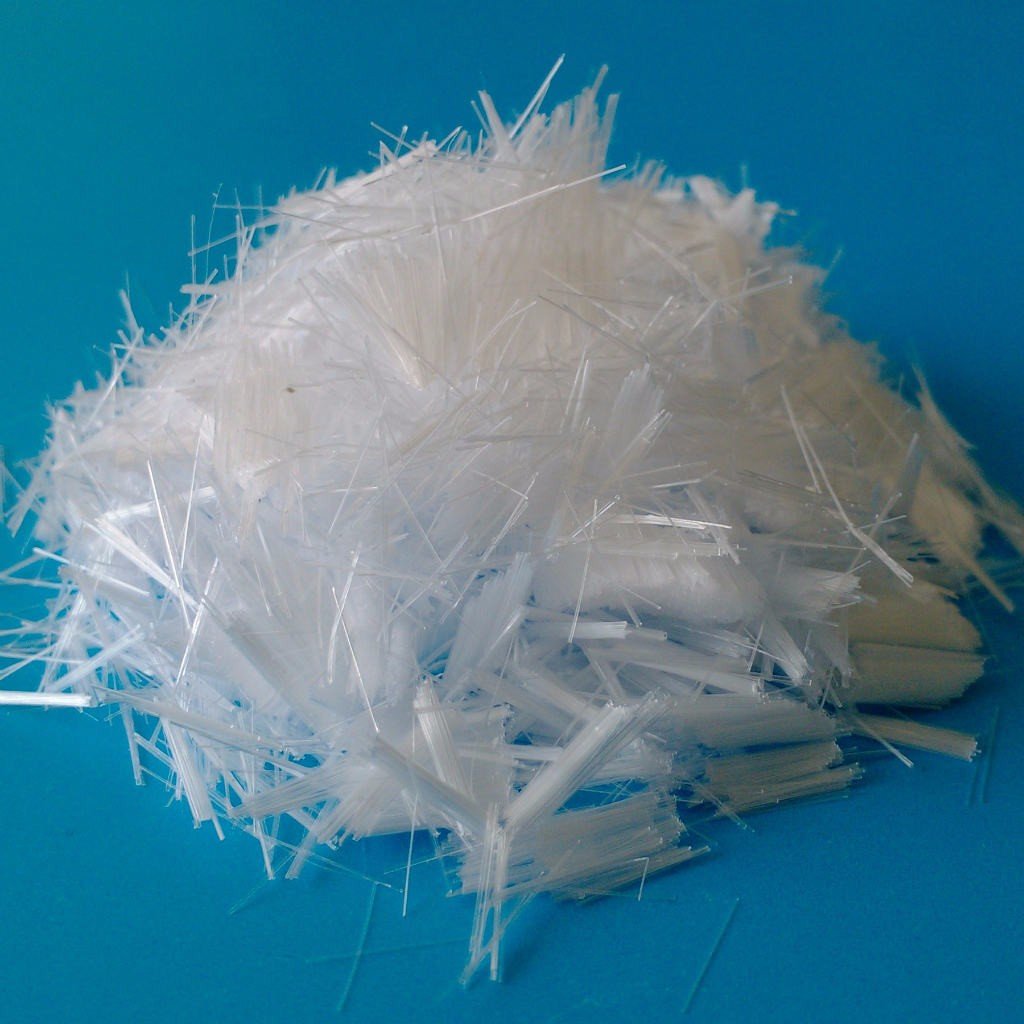
5. Polyethylene Fiber (PE / UHMWPE)
Polyethylene fiber, especially ultra-high molecular weight polyethylene (UHMWPE) fiber, is a high-performance synthetic fiber with extremely high strength and low density.
Key Advantages
- Very high tensile strength and modulus: Tensile strength can be several times that of steel fiber, with a very low density.
- Excellent impact resistance and energy absorption
- Superior Chemical Resistance: Resistant to acids, alkalis, and seawater; almost non-absorbent.
- Excellent Wear Resistance: Low friction coefficient and self-lubricating properties.
Typical Applications
- Ultra-high performance concrete (UHPC)
- Blast-resistant and impact-resistant structures
- Marine and coastal engineering
- Lightweight protective panels
PE fiber is often used in advanced and high-performance concrete systems.
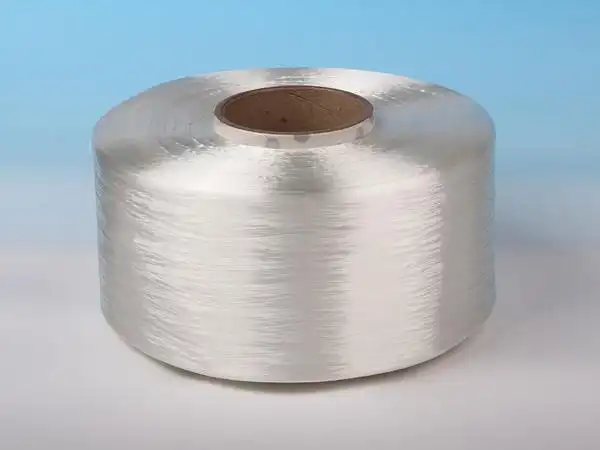
6. Nylon Fiber
Nylon fiber (polyamide fiber) is known for its high toughness and elasticity. Although it has been partly replaced by polypropylene fiber, it is still used in specific applications.
Key Advantages
- Very high toughness and elongation: Can stretch 15-30% before breaking, absorbing significant impact energy.
- Excellent Fatigue Resistance: Performs well under repeated loading.
- Good Abrasion Resistance: Smooth surface handles friction well.
- Strong bonding with cement
Typical Applications
- Precast elements exposed to heavy impact
- Concrete pavement joint areas
- Seismic-resistant structural zones
- Shotcrete requires extra toughness
Nylon fiber performs well where flexibility and energy absorption are critical.
7. Carbon Fiber
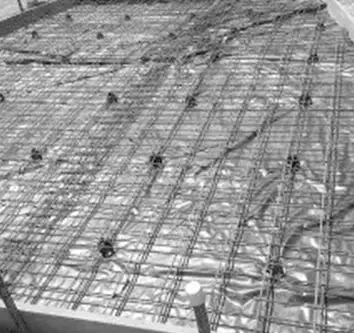
Carbon fiber is produced from PAN or pitch through high-temperature carbonization. It offers the highest strength-to-weight ratio among engineering fibers and is usually added to concrete in short-cut form.
Key Advantages
- Extremely high strength and stiffness: Tensile strength (3000–7000 MPa) and modulus (200–600 GPa) far exceed steel.
- Excellent corrosion resistance: Highly stable in acidic, alkaline, saline, and wet environments.
- Electrical conductivity: Enables smart or self-sensing concrete
- Outstanding fatigue and creep resistance
Typical Applications
- Precision machine foundations
- Structural health monitoring systems
- Offshore platforms and nuclear facilities
- High-strength lightweight reinforcement
Carbon fiber is used in premium projects requiring top-level performance.
8. Basalt Fiber
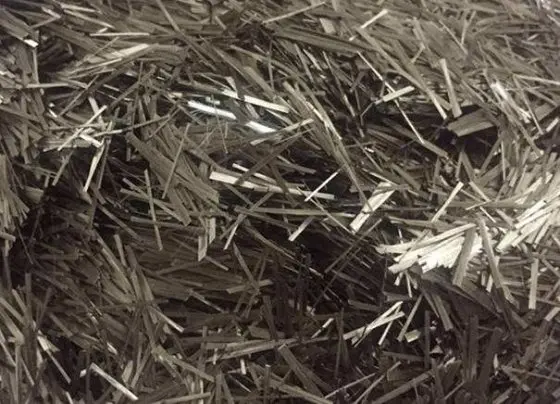
Basalt fiber is made from natural basalt rock melted and drawn into fibers. It is an environmentally friendly inorganic fiber with performance between glass fiber and carbon fiber.
Key Advantages
- Excellent high-temperature resistance: Functional from -260°C to 650°C, outperforming many other fibers.
- Strong resistance to acids, alkalis, and seawater
- Eco-friendly production process: Made from abundant natural rock with no harmful additives in production.
- Good bonding with concrete
Typical Applications
- Road and bridge construction
- Marine structures such as docks and breakwaters
- High-temperature industrial structures
- High-performance shotcrete
Basalt fiber is gaining popularity as a sustainable alternative.
9. Natural Fiber
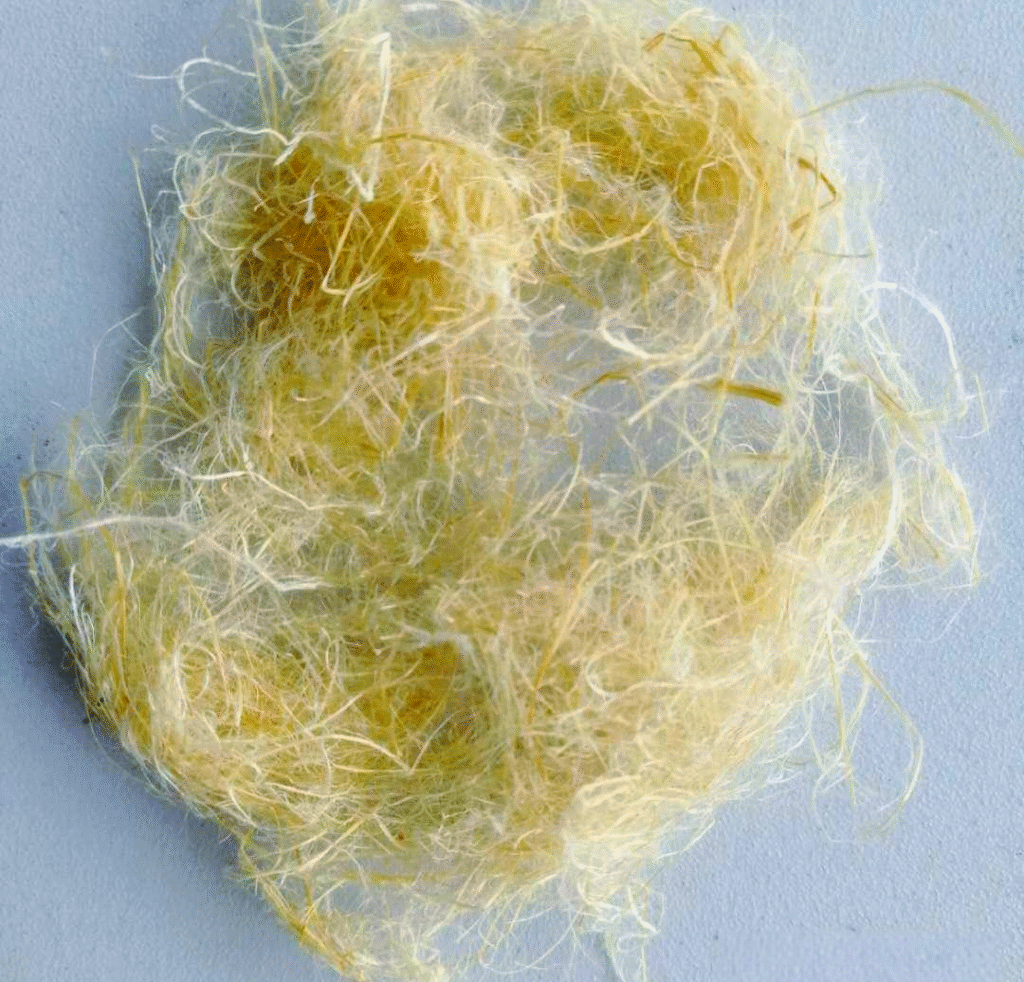
Natural fibers come from plants or animals, such as sisal, jute, coconut, bamboo, flax, and wool. They are renewable and low-cost but usually require treatment to improve durability.
Key Advantages
- Environmentally friendly and renewable
- Very low cost: Ideal for rural areas, developing regions, or temporary works.
- Good toughness and energy absorption: High elongation (3-10%) improves energy absorption and reduces brittleness.
- Lightweight and resource-efficient
Typical Applications
- Non-structural components
- Low-cost housing projects
- Thermal insulation materials
- Temporary or rural construction
Natural fiber is suitable for sustainable and low-budget projects.
Comparison Table of Different Types of Concrete Fibers
| Fiber Type | Strength Level | Crack Control | Impact Resistance | Corrosion Resistance | Temperature Resistance | Cost Level | Typical Applications |
|---|---|---|---|---|---|---|---|
| Steel Fiber | Very High | Excellent (structural) | Excellent | Moderate | High | Medium | Industrial floors, tunnels, bridge decks |
| Glass Fiber (AR) | High | Good | Moderate | Good | Medium | Medium | GRC panels, facades, thin-wall structures |
| Polypropylene (PP) | Low–Medium | Excellent (plastic shrinkage) | Moderate | Excellent | Low–Medium | Low | Slabs, floors, shotcrete, precast pipes |
| Polyester Fiber | Medium | Good | Good | Excellent | Medium | Low–Medium | Highways, airport pavements, repair mortars |
| UHMWPE Fiber | Very High | Excellent | Excellent | Excellent | Medium | High | UHPC, blast-resistant structures |
| Nylon Fiber | Medium | Good | Very Good | Good | Medium | Medium | Seismic zones, impact-resistant precast |
| Carbon Fiber | Extremely High | Excellent | Excellent | Excellent | Very High | Very High | Smart concrete, offshore platforms |
| Basalt Fiber | High | Very Good | Good | Excellent | Very High | Medium | Bridges, marine works, high-temp areas |
| Natural Fiber | Low–Medium | Moderate | Moderate | Low (needs treatment) | Low | Very Low | Low-cost housing, non-structural uses |
Final Thoughts: Choosing the Right Concrete Fiber
From heavy-duty steel to eco-friendly natural fibers, each type offers distinct advantages for concrete reinforcement. The right choice depends on your specific needs—be it strength, crack control, durability, or cost. Often, combining fiber types yields the best results. By matching the fiber to the project’s demands, you can significantly enhance the performance and longevity of concrete structures with fiber-reinforced concrete.
For innovative and reliable solutions across this spectrum, consider Tenabrix. Our expertise in fiber technology helps you build stronger, more durable, and more efficient concrete structures.