











Polypropylene Fiber (PP Fiber) vs. Glass Fiber in Oilfield Drilling Applications
Polypropylene Fiber (PP Fiber) vs. Glass Fiber
Fibers are introduced in drilling fluids and cementing systems primarily to:
- Control wellbore microcracks and fracture propagation
- Reduce fluid loss and maintain well integrity
- Enhance mechanical performance where required
This document provides a technical comparison between Polypropylene Fiber (PP Fiber) and Glass Fiber, offering guidance for fiber selection during engineering evaluation and project planning.
Mechanism of Action
Polypropylene Fiber (PP Fiber)
PP fibers form a flexible three-dimensional network in the fluid or slurry system:
- Bridges microfractures and high-permeability channels
- Provides ductile constraint to limit crack propagation
- Improves impact and fatigue resistance
Engineering focus:
Leak control + crack resistance + system stability
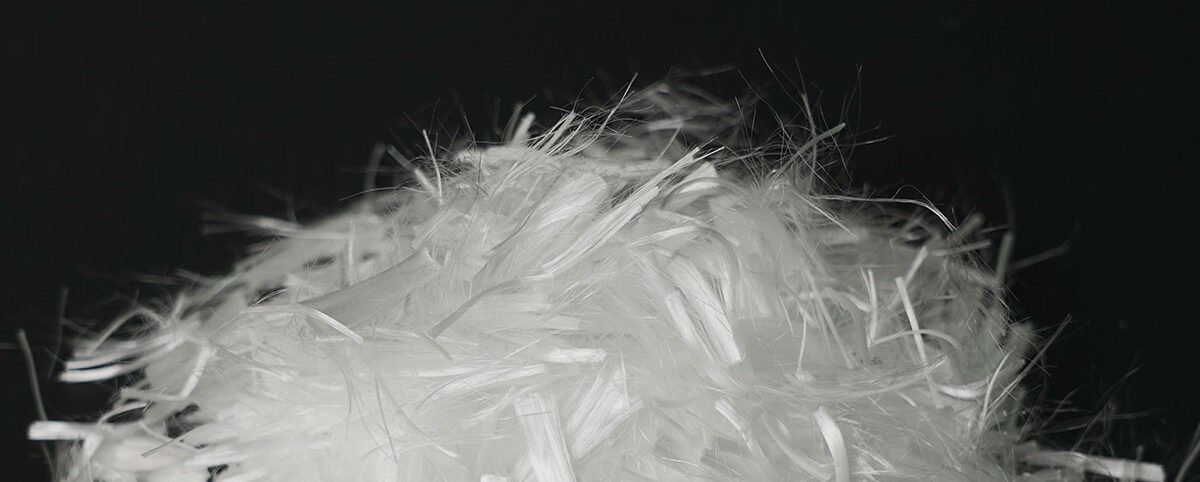
Glass Fiber
Glass fibers rely on their high elastic modulus and stiffness:
- Enhances compressive and flexural strength of the cured system
- Increases overall structural rigidity
Engineering focus:
Structural reinforcement rather than process control
PP Fiber vs. Glass Fiber: Engineering Suitability Comparison
| Parameter | PP Fiber | Glass Fiber |
|---|---|---|
| Primary Purpose | Leak control, crack resistance, system stability | Mechanical strength and rigidity |
| Applicable Systems | Drilling fluids, cement slurries | Structural cements, composites |
| Dispersibility | Easy, shear-stable | Challenging, requires careful mixing |
| Settling Risk | Very low | Moderate to high |
| Impact on Pumping / Circulation | Minimal | May increase equipment wear |
| Chemical Resistance (Acid / Alkali / Salts) | Excellent | Moderate in alkaline environments |
| Operational Window | Wide | Narrow |
| Field Controllability | High | Moderate to low |
Impact on Drilling and Cementing Risks
PP Fiber
- Reduces fluid loss probability
- Minimizes induced fractures in the wellbore
- Lowers gas migration and micro-annulus risks
- Increases operational safety margin
- Characterization: Risk-control-oriented material, suitable for most field conditions.
Glass Fiber
- Enhances cured system strength
- Requires precise slurry design, mixing, and pumping control
- Poor dispersion can cause localized defects
- Characterization: Performance-enhancement material with limited general applicability.
Typical Application Guidance
1. Drilling fluids (especially fluid-loss control)
Recommended: PP Fiber
2. Conventional cementing, microcrack control
Recommended: PP Fiber
3. High-strength structural applications with explicit mechanical requirements
Consider: Glass Fiber (requires field verification)

Blogs You Might Like

What Is Basalt Fiber
What Is Basalt Fiber? A Complete Guide to Properties, Applications, and Advantages

Polypropylene Fiber for Infrastructure and Industr…
The Ultimate Guide to Polypropylene (PP) Fiber: Why It’s the Gold Standard for Modern Infrastructure…


