
 EN
EN  ES
ES  PT
PT  AR
AR  FR
FR Choosing the right synthetic fiber material for concrete is not as simple as “one type fits all.” Polypropylene (PP), polyester (PET), and polyacrylonitrile (PAN) are the three most widely used synthetic fibers in modern concrete construction — but each has fundamentally different chemistry, performance characteristics, and ideal applications.
If you’ve been wondering whether to use PP, PET, or PAN fiber for your next project, this comparison breaks down exactly what you need to know.
What Are Synthetic Fibers for Concrete?
Synthetic concrete fibers are man-made fibers added to concrete mixtures to improve performance. Unlike steel reinforcement, synthetic fibers are lightweight, corrosion-resistant, and easy to mix.
They are commonly used in:
- Concrete floors
- Shotcrete
- Pavements
- Precast concrete
- Tunnel construction
- Industrial structures
The main purpose of synthetic fibers is not to replace traditional reinforcement in every situation but to provide additional crack control and improve concrete durability.
Common synthetic fibers include:
Each material has unique properties that make it suitable for different applications.
Why Material Choice Matters in Synthetic Fiber Reinforcement
Synthetic fibers are not all the same polymer with a different label. The base polymer determines:
- Tensile strength and modulus — how much load the fiber can carry
- Chemical resistance — whether the fiber survives in aggressive environments
- Alkali resistance — critical since concrete has a pH of 12–13
- Thermal stability — performance at elevated temperatures
- Bonding with the cement matrix — determines crack-bridging effectiveness
- Cost per kilogram — directly impacts project economics
Choosing the wrong material can mean the difference between a 30-year service life and premature cracking within the first year.
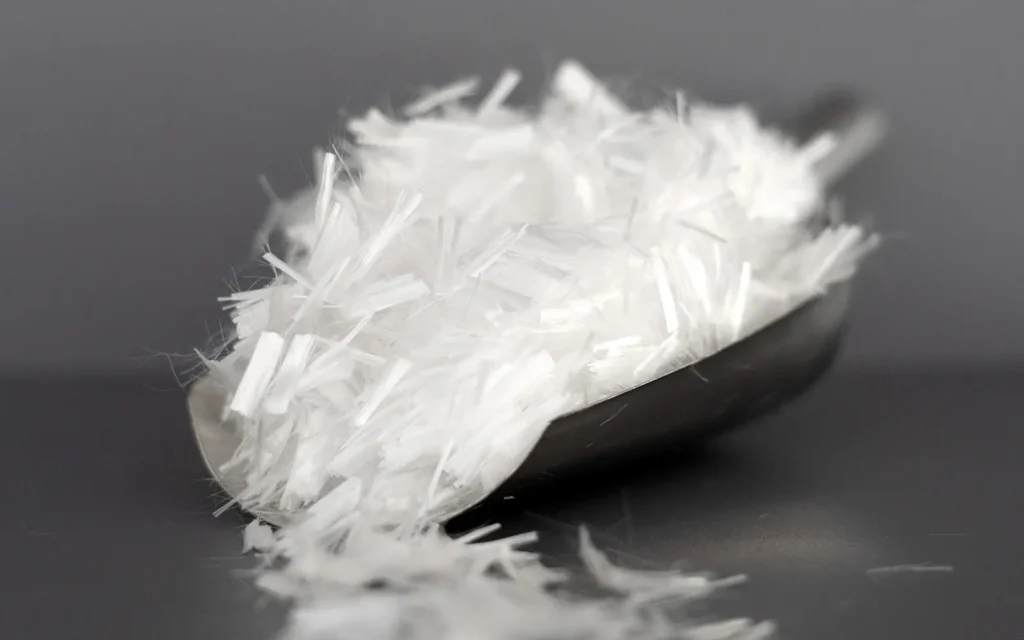
Polypropylene Fiber for Concrete Reinforcement
What Is Polypropylene (PP) Fiber?
Polypropylene is the most common synthetic fiber in the construction industry. It is a thermoplastic polymer made from propylene monomer, known for being lightweight, cost-effective, and chemically inert.
Key Characteristics
| Property | Typical Value |
|---|---|
| Composition | Polypropylene |
| Density | 0.91 g/cm³ |
| Tensile Strength | ≥ 500 MPa |
| Elastic Modulus | ≥ 4000 MPa |
| Melting Point | 160 °C |
| Alkali Resistance | Excellent |
Available Forms
- Monofilament — single-strand fibers, 6–19 mm, for plastic shrinkage control
- Fibrillated — film-cut fibers that open into a net-like structure during mixing
- Macro synthetic — embossed, profiled fibers (40–60 mm) for structural reinforcement
Advantages of Polypropylene Fiber
1. Excellent Crack Control: Polypropylene fibers reduce plastic shrinkage cracks by distributing stress evenly throughout the concrete, improving surface quality and durability.
2. High Chemical Resistance: PP fiber resists water, alkalis, acids, and most chemicals, making it suitable for harsh environments such as wastewater plants, industrial floors, and marine structures.
3. Lightweight and Easy to Mix: With low density and no corrosion risk, polypropylene fiber is easy to transport, mix, and handle compared with steel fiber.
Best Applications
- Residential and commercial slabs-on-grade
- Industrial flooring (macro grade)
- Precast elements
- Shotcrete
- Any application where cost efficiency is the primary driver
Polyester Fiber for Concrete Reinforcement
What Is Polyester (PET) Fiber?
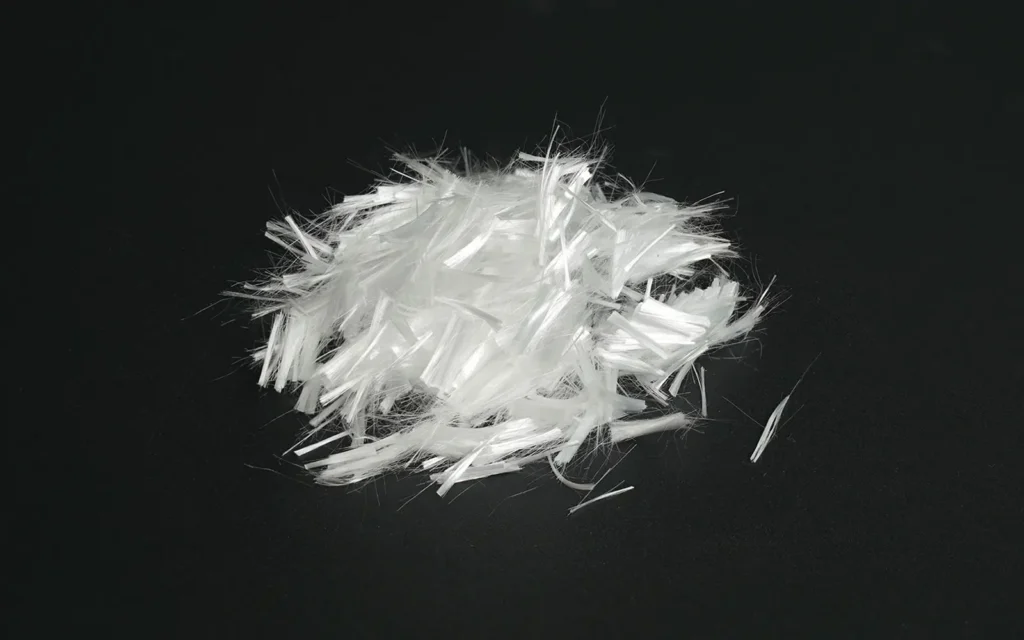
Polyester fiber is made from polyethylene terephthalate — the same polymer used in beverage bottles. In concrete, PET fiber offers higher tensile strength and modulus than PP, with better high-temperature performance.
Key Characteristics
| Property | Typical Value |
|---|---|
| Composition | Organic dibasic acid and diol |
| Diameter | 12, 15, 18 μm |
| Tensile Strength | ≥ 1100 MPa |
| Elastic Modulus | ≥ 9000Mpa |
| Melting Point | 255–265 ℃ |
| Alkali Resistance | Good (slightly below PP) |
Key Advantage of Polyester Fiber
- Higher Tensile Strength: Compared with polypropylene fiber, polyester fiber offers higher tensile strength, helping concrete resist tensile stress, crack growth, and surface damage.
- Good Abrasion Resistance: olyester fiber provides excellent wear resistance, making it suitable for high-traffic areas such as industrial floors, warehouses, pavements, and transportation infrastructure.
- Good Dimensional Stability: Polyester fiber maintains its shape under temperature changes, ensuring stable long-term performance in demanding applications.
Best Applications
- Asphalt concrete reinforcement (where higher melting point is critical)
- Thin precast elements requiring high early strength
- Industrial floors where higher stiffness is needed
- Hybrid systems with PP macro fiber
- Warm-climate construction where PP may soften
PAN Fiber for Concrete Reinforcement
What Is PAN (Polyacrylonitrile) Fiber?
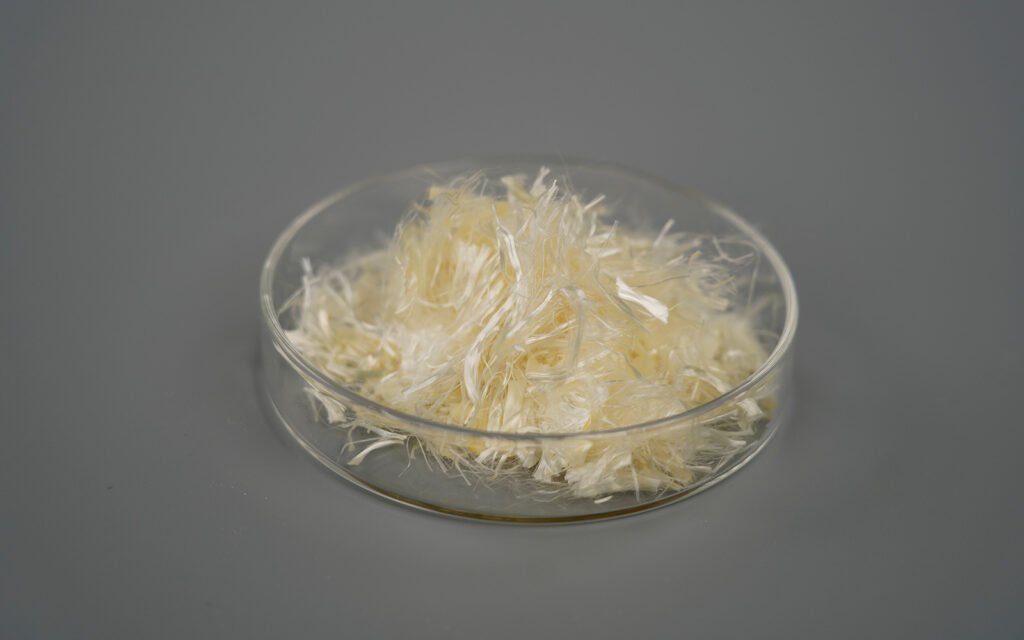
PAN fiber is the premium option among synthetic concrete fibers. It is made from acrylonitrile polymer and is best known for its exceptional chemical resistance, high-temperature stability, and strong bonding with the cement matrix.
Key Characteristics
| Property | Typical Value |
|---|---|
| Composition | 100% Polyacrylonitrile |
| Equivalent Diameter | 14-18 μm |
| Tensile Strength | ≥ 500 MPa |
| Elastic Modulus | ≥ 4000 MPa |
| Heat Resistance | ≥ 200 ℃ |
| Alkali Resistance | Excellent |
Advantages of PAN Fiber
Excellent Mechanical Performance: PAN fiber offers high tensile strength, toughness, and crack resistance, improving concrete’s ability to withstand repeated loading and impact.
Superior Durability: With excellent resistance to extreme temperatures, freeze-thaw cycles, and mechanical stress, PAN fiber is suitable for tunnels, mining structures, and high-performance concrete applications.
Improved Concrete Toughness: PAN fiber helps concrete absorb energy after cracking, enhancing impact resistance, durability, and service life.
Best Applications
- High-performance concrete
- Tunnels
- Mining applications
- Extreme environments
It is the preferred choice when maximum durability and toughness are required.
PP vs PET vs PAN: Side-by-Side Comparison
| Property | PP Fiber | PET Fiber | PAN Fiber |
|---|---|---|---|
| Density (g/cm³) | 0.91 | 1.38 | 1.18 |
| Tensile Strength (MPa) | 300–700 | 400–1,100 | 500–900 |
| Elastic Modulus | ≥4500 MPa | ≥9000 MPa | ≥4000 MPa |
| Melting Point | ~165°C | ~260°C | ≥200°C |
| Alkali Resistance | ★★★★★ | ★★★★☆ | ★★★★★ |
| Chemical Resistance | ★★★★☆ | ★★★☆☆ | ★★★★★ |
| Fire Performance | Poor (melts) | Moderate | Excellent (carbonizes) |
| Bond to Cement | Good | Good | Excellent |
| Workability Impact | Low | Moderate | Low–Moderate |
| Best For | General purpose, cost-driven | Stiffness, heat resistance | Chemical, fire, marine |
Frequently Asked Questions
Q: Is PAN fiber always better than PP fiber?
A: No. PAN fiber excels in chemical resistance, fire safety, and high-temperature applications — but for standard concrete crack control and industrial flooring, PP fiber delivers equivalent performance at a lower cost. The “best” material depends on the application.
Q: Can I mix PP and PAN fiber in the same concrete?
A: Yes — this is a hybrid approach. For example, 0.9 kg/m³ of PAN fiber for chemical resistance combined with 5 kg/m³ of PP macro fiber for structural reinforcement. This is common in chemical plant flooring specifications.
Q: Why is PET fiber less common than PP in concrete?
A: PP fiber established market dominance early due to low cost, excellent alkali resistance, and wide availability. PET offers marginal performance advantages that don’t always justify the higher price. PET is more common in asphalt and geotextile applications than in concrete.
Q: Does PAN fiber’s higher cost pay off?
A: In the right applications — absolutely. For bridge decks exposed to de-icing salts, chemical plant floors, marine structures, and fire-rated tunnels, PAN fiber’s superior chemical and thermal performance prevents failures that would cost orders of magnitude more to repair. For standard slabs, the premium is harder to justify.
Q: How do I know which fiber material is right for my project?
A: Start by identifying your primary risk: Is it chemical exposure? Fire safety? Cost? Crack control? Once you know the main threat, the material choice becomes clear. See our Complete Guide to Choosing Concrete Fiber Reinforcement for a step-by-step decision framework.
Conclusion
When comparing polypropylene vs polyester vs PAN fiber for concrete, the best choice depends on your project needs.
Polypropylene fiber is ideal for affordable and reliable crack control. Polyester fiber provides improved strength and durability for demanding applications. PAN fiber delivers advanced performance for high-performance concrete structures.
Understanding the differences between these materials helps engineers, contractors, and buyers select the right fiber solution for better concrete performance and longer service life.
Get Expert Material Selection Support
At TenaBrix, we manufacture all three fiber types — PP, PET, and PAN — which means we can recommend the right material for your project without bias toward any single product.
Our technical team has specified fiber reinforcement for projects ranging from standard warehouse floors to chemical plant containment structures and tunnel fire safety systems.
Contact our team for a free material recommendation →
We’ll review your project requirements and provide a written recommendation with dosage specifications, typically within 24 hours.