





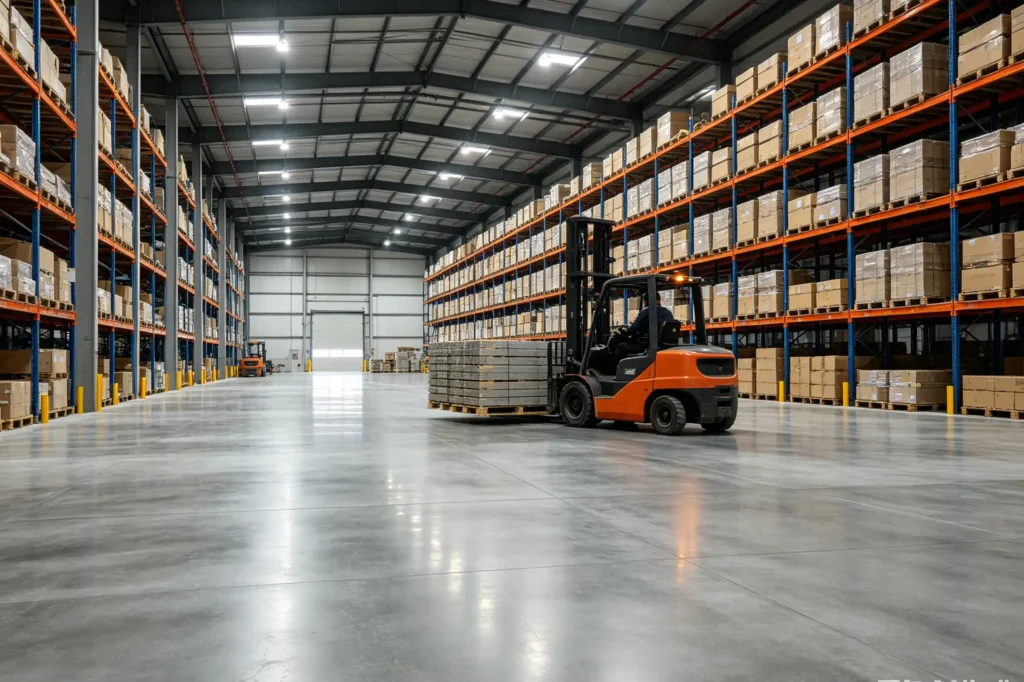
Industrial concrete floors face constant stress every day. Heavy forklifts, pallet trucks, production equipment, impact loads, temperature changes, and chemical exposure all put enormous pressure on concrete slabs. Without proper reinforcement, floors can develop cracks, experience surface wear, and require costly repairs that interrupt operations.
One of the most effective ways to improve industrial concrete flooring is by adding fiber reinforcement. Different types of concrete fibers help control cracking, increase durability, improve impact resistance, and in many cases reduce or even replace traditional steel mesh.
In this guide, you’ll learn how to choose the best fiber for concrete floors based on your project requirements. We’ll compare the most common fiber types, explain their advantages and limitations, and help you determine the right solution for warehouses, factories, logistics centers, manufacturing plants, cold storage facilities, and other industrial flooring applications.
Why Industrial Floors Need Fiber Reinforcement
Common Industrial Flooring Failures
Industrial floors fail in predictable ways. Here are the four you’ll see most often:
1. Wide shrinkage cracks — Concrete shrinks as it cures. Without reinforcement, shrinkage cracks open wide enough to catch forklift wheels, chip at edges, and let water and chemicals penetrate the slab.
2. Joint deterioration — Joints are the weakest part of any floor. Under repeated forklift traffic, joint edges spall and break down. Once a joint fails, the crack spreads.
3. Surface fatigue — Heavy, repetitive loads slowly break down the concrete surface. You’ll see crazing, scaling, and eventually potholes — especially in high-traffic aisles.
4. Curling — The top of the slab dries faster than the bottom, causing the edges to curl upward. This creates voids under the slab, leading to cracking when loads pass over.
How Fiber Prevents These Failures
Fiber doesn’t make concrete stronger in the traditional sense. Instead, it holds the concrete together after cracks start to form. Think of it as thousands of tiny bridges inside the slab — when a crack tries to open, the fibers span across it and keep it closed.
This means:
- Shrinkage cracks stay hairline-thin instead of opening wide
- Joints last longer because fiber reinforcement reduces the load concentration at joint edges
- Surface holds up better under repetitive traffic
- Curling is reduced because fiber controls the differential shrinkage that causes it
For a deeper dive into how cracks form and how to stop them, read our warehouse floor crack prevention guide.
Fiber Types for Industrial Flooring
Not all fibers are suited for industrial floors. Here are the four options that matter.
Macro Synthetic Fiber
Macro synthetic fiber (polypropylene, 40–60mm) is the most popular choice for modern industrial floors. It replaces traditional steel mesh and provides post-crack structural reinforcement.
- Typical dosage: 4–7 kg/m³
- Best for: Distribution centers, logistics warehouses, manufacturing plants, heavy-duty slabs, port facilities, aircraft hangars
- Replaces: Welded wire mesh
- Key advantage: Will not corrode — ever. Lighter than steel fiber. Can replace welded wire mesh in many applications. Excellent crack control. High toughness. Improved fatigue resistance
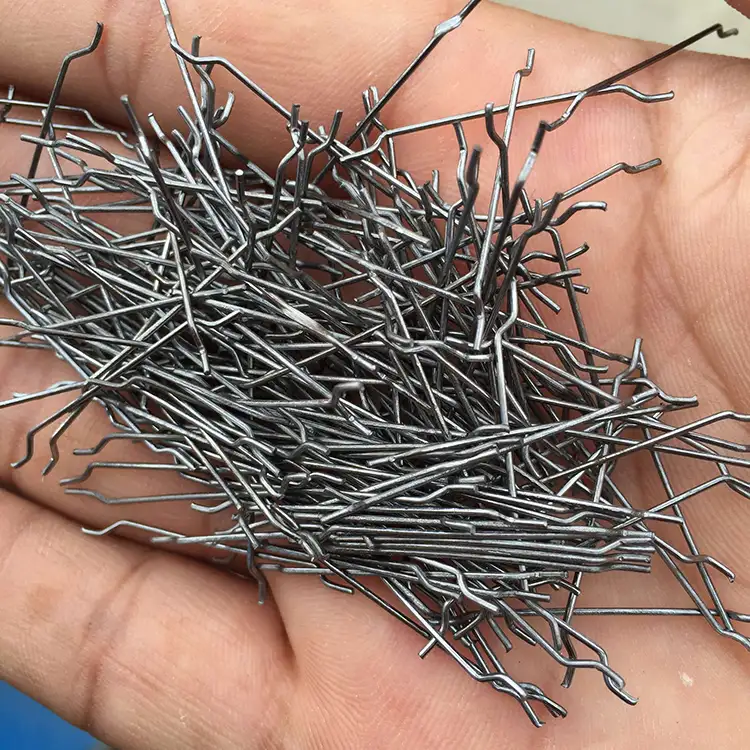
Steel Fiber
Steel fiber has been the go-to for heavy-duty industrial floors for decades. It offers the highest post-crack strength of any fiber type.
- Typical dosage: 20–40 kg/m³
- Best for: Heavy industrial facilities. Mining floors. Container yards. Military pavements. Heavy machine foundations
- Key advantage: Very high load capacity. Excellent impact resistance. Superior toughness. Long service time
- Drawback: Heavy, can corrode, harder to finish, and more expensive per cubic meter
For a detailed head-to-head, see our macro fiber vs steel fiber comparison.
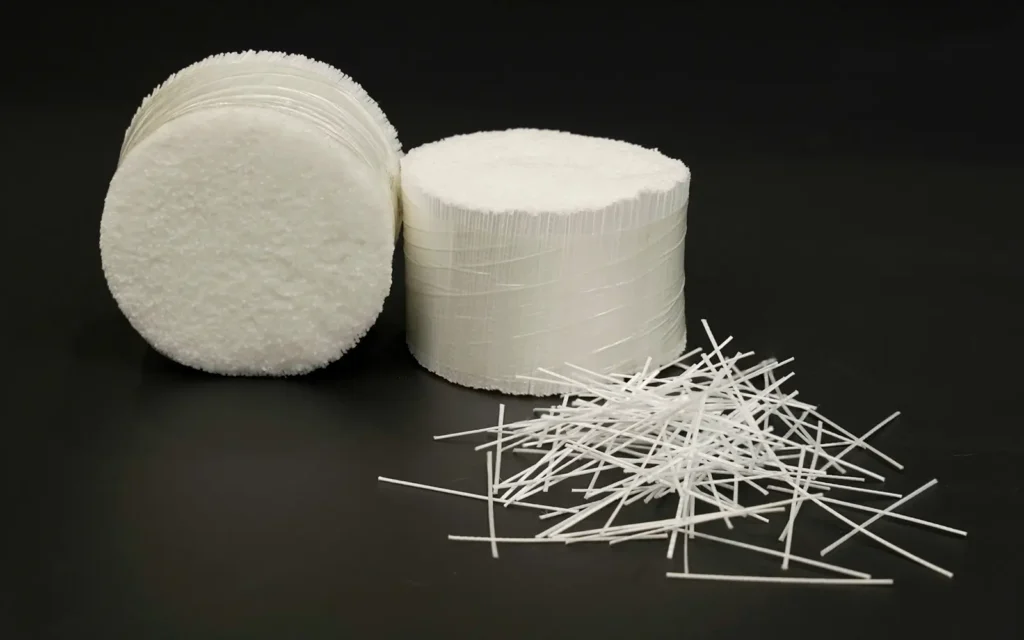
Micro Synthetic Fiber (Secondary Reinforcement)
Micro fiber (polypropylene, 6–19mm) is not a standalone solution for industrial floors — but it’s essential as a secondary reinforcement.
- Typical dosage: 0.9 kg/m³
- Best for: Warehouse floors. Factory slabs. Parking areas. Residential slabs. Industrial pavements
- Key advantage: Controls early-age cracking. Improves surface quality. Reduces bleeding. Minimizes plastic settlement cracks. Non-corrosive. Easy to mix
- What it does: Prevents plastic shrinkage cracks in the first 24 hours
- How to use it: Always pair with macro fiber or steel fiber in a hybrid system
Hybrid Systems (Micro + Macro)
The industry best practice. Micro fiber handles the first 24 hours; macro fiber handles the next 20 years. For most industrial flooring applications, a hybrid system delivers the best performance per dollar.
| Fiber System | Dosage | Best Application |
|---|---|---|
| Macro Synthetic Only | 5 kg/m³ | Budget-conscious projects |
| Steel Fiber Only | 30 kg/m³ | Heavy manufacturing |
| Hybrid (Micro + Macro) | 0.9 + 5 kg/m³ | Recommended for most floors |
| Hybrid (Micro + Steel) | 0.9 + 30 kg/m³ | Extreme load environments |
Comparing Common Industrial Flooring Fibers
| Fiber Type | Crack Control | Structural Reinforcement | Corrosion Resistance | Typical Applications |
|---|---|---|---|---|
| PP Microfiber | Excellent (plastic shrinkage) | Low | Excellent | General concrete slabs |
| Macro Synthetic Fiber | Excellent | High | Excellent | Warehouses, logistics centers |
| Steel Fiber | Excellent | Very High | Moderate | Heavy industrial floors |
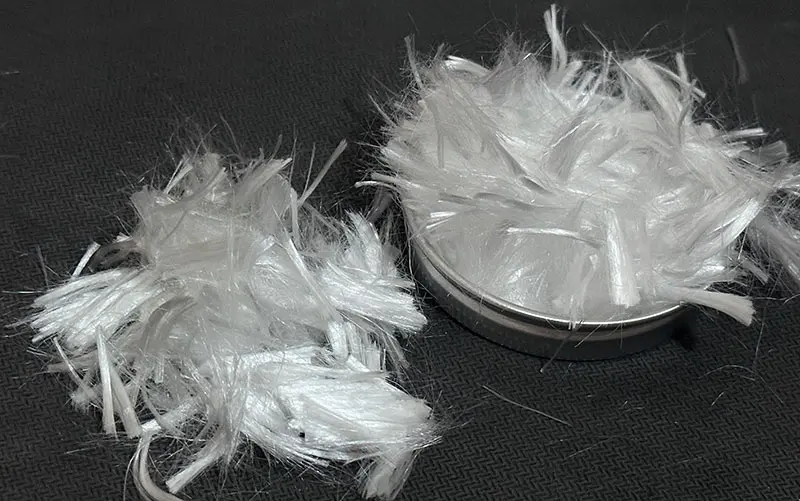
| Glass Fiber | Moderate | Low | Good | Decorative concrete |
| Basalt Fiber | Good | Moderate | Excellent | Specialty applications |
Typical Fiber Applications in Industrial Flooring
Every industrial facility has different demands. Here’s what works for each.
Warehouse & Distribution Centers
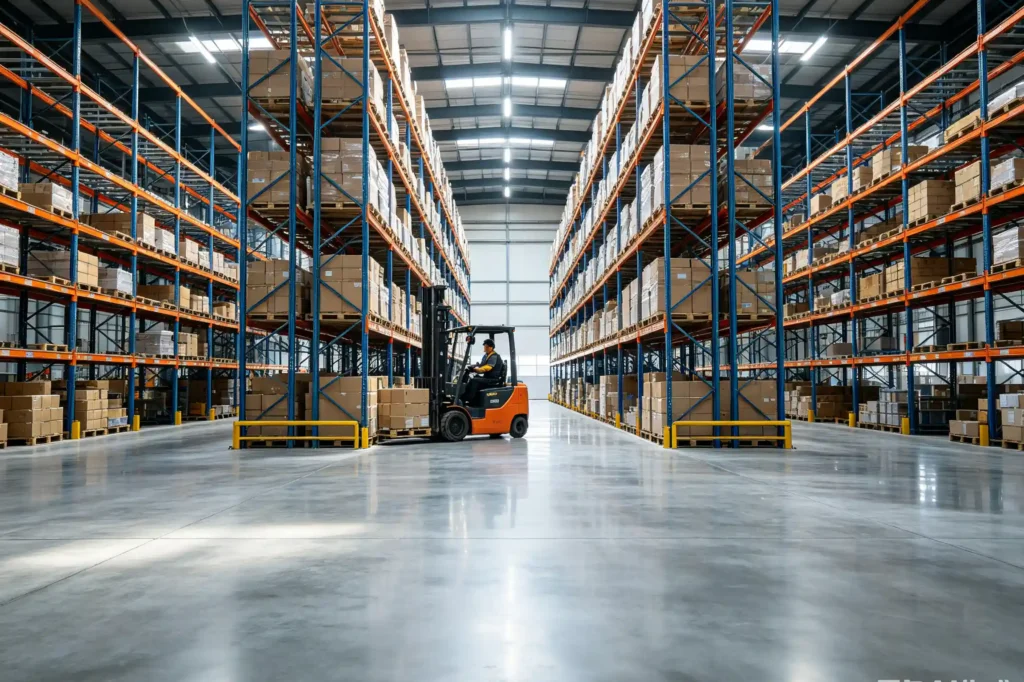
The challenge: Heavy forklift traffic, high wheel loads, 24/7 operations, and zero tolerance for downtime.
Recommended system: Hybrid — 0.9 kg/m³ micro + 5 kg/m³ macro synthetic fiber
Why: Macro fiber replaces steel mesh, controls shrinkage cracking, and handles forklift loads. Micro fiber prevents early surface cracks. The system costs less than mesh, installs faster, and eliminates on-site mesh placement labor.
Manufacturing Plants
The challenge: Static loads from heavy machinery, vibration, oil and chemical spills, and potential temperature fluctuations.
Recommended system: Hybrid — 0.9 kg/m³ micro + 6–7 kg/m³ macro fiber (or 30 kg/m³ steel fiber for extreme loads)
Why: Manufacturing floors need higher dosage than warehouses because of sustained static loads. If the plant uses corrosive chemicals, consider adding PAN fiber for chemical resistance.
Cold Storage Facilities
The challenge: Thermal cycling from -25°C to +15°C causes repeated expansion and contraction. Standard concrete cracks quickly under these conditions.
Recommended system: Hybrid — 0.9 kg/m³ micro + 6 kg/m³ macro fiber
Why: Macro fiber handles the thermal movement that would otherwise crack the slab. The key is to widen joint spacing slightly (6–7m instead of 4–5m) to accommodate thermal expansion. For exact dosage rates, see our fiber dosage guide.
Chemical Processing Plants
The challenge: Acid spills, alkali exposure, solvent leaks, and strict hygiene requirements.
Recommended system: Hybrid — 0.9 kg/m³ PAN fiber + 5 kg/m³ macro fiber
Why: PAN fiber is the only common synthetic fiber with excellent resistance to acids, alkalis, and organic solvents. Combined with macro fiber for structural reinforcement, this system handles both the chemical and physical demands of chemical plant flooring.
Parking Structures
The challenge: De-icing salts, freeze-thaw cycling, vehicle oils, and heavy point loads from vehicle tires.
Recommended system: Hybrid — 0.9 kg/m³ micro + 5 kg/m³ macro fiber
Why: Macro fiber handles the structural loads; micro fiber controls surface cracking from thermal cycling. The non-corroding nature of synthetic fiber is especially valuable in parking structures where de-icing salts would eventually corrode steel reinforcement.
Frequently Asked Questions
Is macro synthetic fiber strong enough for heavy industrial floors?
Yes. At 5–7 kg/m³, macro synthetic fiber provides post-crack performance equivalent to steel mesh and approaches steel fiber performance for most floor loading conditions. It’s approved under ACI 544 and EN 14889-2. For extreme point loads or impact, steel fiber may still be preferred.
Can I use fiber instead of rebar in my industrial floor?
For slab-on-grade floors (slabs poured directly on ground), yes — fiber can replace mesh and in many cases eliminate the need for rebar. For suspended slabs, slabs on piles, or structural slabs, you still need traditional steel reinforcement. Always consult a structural engineer.
How do I choose between synthetic and steel fiber for my floor?
For most warehouse and distribution floors, synthetic macro fiber is the better choice — it’s lighter, won’t corrode, easier to finish, and costs less per cubic meter. Steel fiber is better for heavy manufacturing with extreme loads or impact. See our macro vs steel fiber comparison for details.
Will fiber affect my floor’s surface finish?
Micro fiber has no visible effect on surface finish. Macro fiber may cause minor protrusion but is manageable with proper power troweling. For polished or decorative floors, use micro fiber only.
How much does fiber add to the cost of an industrial floor?
A hybrid system (micro + macro) typically adds 7–10 per cubic meter of concrete—about $1.40–$2.00 per square meter for a 200mm slab. This is usually less than the cost of steel mesh material alone, before accounting for labor savings.
Conclusion
Selecting the right fiber reinforcement is one of the most important decisions when designing an industrial concrete floor. The ideal solution depends on factors such as load requirements, environmental conditions, construction methods, and long-term maintenance goals.
For most modern warehouses, logistics centers, factories, and commercial facilities, macro synthetic fibers provide an excellent balance of strength, durability, corrosion resistance, and construction efficiency. Polypropylene microfibers remain an effective choice for controlling early-age shrinkage cracking, while steel fibers continue to deliver exceptional performance in the most demanding heavy-duty applications.
By understanding how each fiber type performs, project owners, engineers, and contractors can build concrete floors that last longer, require less maintenance, and deliver greater value over their entire service life.
Get a Free Flooring Fiber Recommendation
Every industrial floor is different. Slab thickness, soil conditions, load requirements, and exposure environment all affect the optimal fiber specification.
Our technical team has specified fiber for industrial floors in 30+ countries — from small manufacturing facilities to million-square-foot distribution centers.
Get a free fiber recommendation for your project →
Send us your project details and we’ll provide a specific dosage recommendation, cost comparison, and technical data sheet — usually within 24 hours.